

For the first time in decades, Pakistan seems to be confronting the problem it helped create – the radicalization. Islamabad’s frustration with the Afghan Taliban—the very movement it once nurtured—has reached a breaking point. In recent months, Pakistani officials have accused the Taliban regime in Kabul of harboring and supporting the Tehrik-i-Taliban Pakistan (TTP), a militant group now responsible for a surge of attacks inside Pakistan. The Afghan Taliban deny the charge, but the tension has already spilled into violence: Pakistan has launched airstrikes across the border, and Taliban forces have retaliated by targeting Pakistani military posts along the Durand Line, the still-disputed frontier dividing the two countries.
This escalating conflict has ignited waves of nationalistic rhetoric in both countries’ tightly controlled media. Yet beneath the surface, a remarkable shift is taking place in Pakistan’s own public discourse. After years of denial, a growing number of Pakistani journalists, analysts, and even officials are beginning to acknowledge what Afghans have long claimed—that Pakistan’s powerful military and intelligence establishment, especially the Inter-Services Intelligence (ISI), spent decades cultivating extremist groups as tools of foreign policy. What was once dismissed as Afghan blame-casting is now echoing within Pakistan’s own walls, revealing a slow and uneasy reckoning with a policy that has come full circle.
Following the collapse of the Taliban regime in 2001, many senior leaders found refuge in Pakistan, where they reorganized with the help of sympathetic networks. This led to the gradual emergence of a new militant coalition. By 2007, the TTP was formally established as an umbrella organization uniting various jihadist factions operating along the Durand Line, the porous border between Afghanistan and Pakistan. The communities on both sides of this border share significant ethnic, linguistic, and religious ties, particularly among the Pashtun tribes, who have historically faced marginalization in both countries.
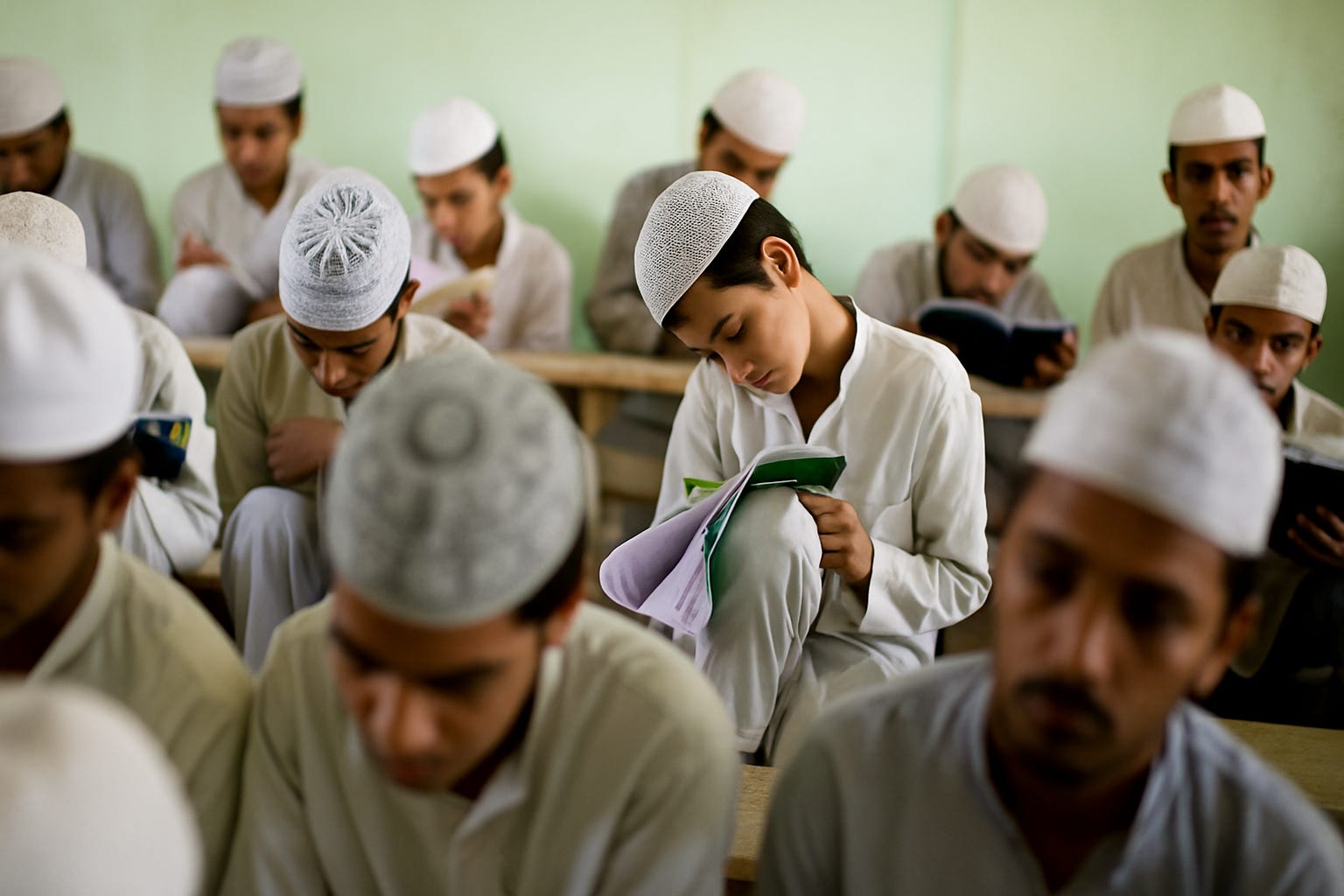
In Pakistan, most of these groups were concentrated in the Federally Administered Tribal Areas (FATA), which, until 2018, were governed by a colonial-era framework known as the Frontier Crimes Regulation (FCR). This system significantly restricted the reach of Pakistan’s civilian institutions, leaving the region without access to modern education, healthcare, and infrastructure. In this context, madrassas—religious seminaries often supported by political or external actors—became the main sources of education and social mobility. These institutions not only addressed the educational gap but also provided ideological frameworks that facilitated militant recruitment, particularly when influenced by powerful institutions seeking strategic advantage.
The TTP declared war on the Pakistani state in an effort to impose its interpretation of Sharia law. Over the years, it has conducted a campaign of terror throughout Pakistan, targeting civilians, soldiers, and schools. Its most devastating act occurred in December 2014, when gunmen attacked the Army Public School in Peshawar, resulting in the deaths of over 130 children. Two years prior, the group attempted to silence Malala Yousafzai, a young advocate for girls’ education in Swat Valley, whose survival and international recognition have come to symbolize resistance against the extremism that Pakistan once supported.
In response, the Pakistani government employed military force, designating the TTP as a terrorist organization and launching extensive operations like Zarb-e-Azb (2014) and Radd-ul-Fasaad (2017) to dismantle its networks. However, while Islamabad focused on combating the TTP domestically, it continued to support the Tehrik-i-Taliban Afghanistan (TTA) across the border, viewing them as a strategic asset for maintaining influence in Afghanistan. This contradictory approach—labeling militants as “good” or “bad” Taliban—has had significant repercussions. The TTP has not only persisted but has also gained strength, drawing ideological support and safe havens from its Afghan counterparts. In attempting to leverage extremism for geopolitical gain, Pakistan now finds itself caught in a complex situation of its own making.
The Radicalization Project
In December 1979, the Soviet Union’s invasion of Afghanistan led to millions of Afghans fleeing their homes, seeking refuge in Pakistan, Iran, and other neighboring countries, resulting in one of the largest refugee crises of the 20th century. Within Afghanistan, a jihad emerged, framed as a holy war against Soviet occupation and the communist regime in Kabul supported by Moscow. The Western allies recognized Afghanistan as a crucial front in the Cold War, prioritizing the defeat of the Soviets and initiating a significant covert operation to arm and fund the Afghan resistance.
Arab states, particularly Saudi Arabia, matched American funding and mobilized volunteers from across the Muslim world united under the banner of Islamic solidarity. Concurrently, a vast network of madrassas—Islamic seminaries established along the Pakistani-Afghan border—became centers for recruitment, indoctrination, and logistical support for the Afghan jihad. Many of these madrassas, following the Deobandi tradition, served not only as religious institutions but also as ideological training grounds where anti-communist and pan-Islamic narratives merged with militant fervor. What began as a strategy to weaken the Soviet Union ultimately laid the groundwork by ISI for a new generation of radicalized fighters, whose influence would persist long after the Cold War concluded.
The ISI played a crucial role in shaping the Afghan jihad during the 1980s. It initiated a comprehensive effort to radicalize Afghan resistance and mobilize fighters for the anti-Soviet war, turning what could have been a nationalist struggle into an ideologically driven holy war. Historically, Afghans had resisted foreign invasions through tribal and nationalist means without resorting to militant Islamism. However, the Pakistani establishment viewed Islamic radicalization as a way to align Afghanistan’s resistance with its regional ambitions, particularly against India. This strategy aimed to achieve three interconnected goals: to create a weak, religiously influenced Afghan state reliant on Pakistan; to establish a friendly regime in Kabul that would counter Indian influence; and to secure strategic access to Central Asia, while maintaining Pakistan’s dominance in the region.
Central to this geopolitical strategy was the madrassa system, which the Pakistani military and religious elites transformed into a tool for ideological engineering under the guise of religious education. Presented as a defense of Islam against communism, these madrassas became breeding grounds for a generation of young men who learned to associate piety with militancy and modernity with moral decline. What began as a Cold War alliance in the name of faith and freedom evolved into a self-sustaining system. Even after the Soviet withdrawal in 1989, the networks, doctrines, and loyalties formed during that time persisted—adapting to new adversaries and political landscapes.
Thousands of madrassas, many funded by Saudi Arabia and other Gulf donors, were established along the Durand Line and throughout Pakistan’s side of the Durant Line. The Deobandi tradition, exemplified by the Darul Uloom Haqqania in Akora Khattak, became the template for this initiative. Known as the “University of Jihad,” Haqqania produced many future leaders of the Taliban movement. By merging religious education with militant indoctrination, Pakistan’s establishment not only created a proxy army for its regional strategy but also fostered a transnational ideological movement whose effects continue to resonate across South and Central Asia today.
During the 1980s, the madrassa network expanded significantly, reaching refugee camps and impoverished border communities by providing free food and religious education to children. Many Afghan refugee families, unable to access public schools in Pakistan and eager to educate their children, inadvertently became part of a larger ideological movement. What started as a response to the Soviet invasion gradually evolved into a long-term indoctrination system. Even after the Soviet withdrawal, these madrassas continued to function under the oversight of ISI, aligning with the state’s strategy for “strategic depth” in Afghanistan. By the early 1990s, they had become self-sustaining entities—politically advantageous, financially backed by Gulf donors, and ideologically independent enough to continue their mission without direct control.
Over time, these seminaries spread throughout Pashtun-majority regions of Pakistan, enrolling not just Afghan refugees but also local Pakistani students. The distinction between host and refugee communities diminished as shared classrooms created a new generation united by a common militant identity. By the mid-1990s, thousands of these students—referred to as Taliban, or “students of religion”—crossed into Afghanistan to engage in jihad and restore what they viewed as Islamic order. Upon capturing Kabul in 1996, they established the first Islamist regime in Afghanistan’s history, shaped not by tribal traditions or nationalism but by a strict madrassa-based ideology.
In the following five years, the Taliban regime imposed an extremist societal vision rooted in the authoritarian, male-dominated culture of the madrassas from which it originated. Their interpretation of Islam positioned men and women as fundamentally unequal—men as enforcers of divine order, women as subjects confined to obedience and domestic roles. Under this doctrine, education for girls was prohibited, women were excluded from public life, and a comprehensive system of surveillance and punishment was implemented through the Ministry for the Promotion of Virtue and Prevention of Vice. The outcome was one of the most severe and systematic gender apartheid systems in modern history—a direct political manifestation of the ideology once propagated in Pakistan’s seminaries.
Following the Taliban’s fall in 2001, many of their leaders sought refuge in Pakistan, regrouping under the protection of supportive religious networks and elements within the security establishment. During this time, the TTP emerged in 2007, uniting various militant factions operating in Pakistan’s tribal borderlands. This development resulted in the formation of two distinct yet ideologically connected movements: the TTA and the TTP. The TTP pledged bay‘ah—a religious oath of allegiance—to the TTA’s leadership, reinforcing their shared objectives of establishing Islamic governance and resisting Western influence.
The Pakistani establishment made a strategic distinction between the “good Taliban”—the TTA, which aligned with Pakistan’s regional goals in Afghanistan—and the “bad Taliban”—the TTP, which directly threatened Pakistan’s internal stability. In practice, however, both groups maintained close ideological, operational, and tribal connections. Pakistan’s intelligence and religious institutions played a crucial role in facilitating the TTA’s resurgence, providing sanctuary and logistical support that enabled it to sustain a prolonged insurgency against the U.S.-backed Afghan Republic. The Taliban’s return to power in August 2021 not only signified the collapse of the Afghan Republic but also initially seemed to fulfill Pakistan’s longstanding strategy of achieving “strategic depth” in Afghanistan, a strategy that has since proven to be quite problematic. Many senior Taliban leaders, including the current Emir, Hibatullah Akhundzada, were educated in Pakistani madrassas, some of which they later managed madrassas in Quetta and other border regions.
When the Taliban took control of Kabul, many within Pakistan’s political and military circles celebrated it as a historic victory. The atmosphere in Islamabad was one of triumph; senior officials and commentators viewed it as the culmination of decades of strategic investment. The current Pakistani defense minister, Khawja Asif, famously stated, “You may have the power, but God is with us… Allah is great” referencing the Doha Agreement between the Taliban and the United States. Shortly after the Taliban takeover, the ISI chief made a high-profile visit to Kabul, a symbolic act highlighting Pakistan’s belief that it would have significant influence over the new regime. The expectation was clear: the movement Pakistan had nurtured for years would now help achieve its geopolitical goals and stabilize its western border.
However, the past four years have revealed a different reality. Instead of bolstering Pakistan’s position, the Taliban’s governance has strained bilateral relations. Islamabad had anticipated that the TTA would rein in the activities of the TTP, but this expectation has largely been unmet. After two years of intermittent negotiations, Pakistan has reported that talks have failed, claiming the TTP has found safe havens and tacit support within Afghanistan. Rather than being dismantled, the group appears to have gained strength, launching renewed attacks across Pakistan’s frontier provinces. While there are still occasional diplomatic contacts between Islamabad and Kabul, the fundamental structural tension—stemming from Pakistan’s long-standing reliance on militant proxies—remains unresolved.
Deradicalization: The Way Forward
In recent weeks, a subtle yet significant shift has begun to take shape within Pakistan’s political and military elite. Some policymakers and analysts are reevaluating the long-standing strategy of supporting Islamist militancy as a foreign policy tool, suggesting it may be time to pivot towards supporting a representative Afghan government. Several senior analysts have indicated that the establishment has recognized the need for a strategic recalibration, hinting that Pakistan may no longer back militant proxies. If this is accurate, it would represent one of the most substantial policy shifts in Pakistan’s modern history. However, there is still limited concrete evidence that this new direction has been fully institutionalized, and even if it has, the real challenge lies in execution. Dismantling a structure that has been built and nurtured over four decades will not be straightforward.
The ideology that Pakistan once promoted has now taken root within its own society. according to a 2015 survey, the country is home to approximately 35,000–40,000 madrassas, madrassas, with an enrollment of over three to four million students. However, a November 2025 press briefing by a spokesperson for the Pakistani Army indicated that the number has increased to 100,000, representing a more than 150% rise. Given this expansion, the total enrollment could now easily reach around 10 million students.
Over the past four decades, these institutions have graduated millions of students, many of whom now constitute a significant religious class that influences Pakistan’s social, political, and institutional spheres. Many of these seminaries remain unregistered and operate outside the formal education system, funded by private donations, religious charities, and foreign benefactors. Over the years, this extensive network has cultivated an influential clerical class that wields social authority and political leverage beyond the state’s control. Thus, deradicalization is not just a policy issue but a matter of societal transformation.
Meanwhile, across the Durand line, the Taliban’s regime has reignited the ideological project that originated in Pakistan’s madrassas. Since 2021, the number of religious schools in Afghanistan has reportedly increased more than fifteen-fold, according to estimates from the Taliban officials and education monitors. These new madrassas are reinforcing the same rigid, gender-segregated ideology that Pakistan’s establishment once helped to institutionalize.
A pressing question now faces Islamabad:
what will become of the madrassas that were central to its strategic ambitions but are now contributing to domestic instability?
Can Pakistan realistically reform these institutions—transforming them into genuine centers of learning rather than sites of ideological indoctrination?
Such reform would require not only changes in curriculum and teacher training but also a decisive break from the longstanding practice of using religion for geopolitical advantage.
There are indications within Pakistan’s leadership that such a transformation is essential. Yet the challenge is daunting. The madrassa system has evolved into a self-sustaining, financially independent, and socially entrenched entity, supported by powerful networks of alumni and clerical organizations. Even if Pakistan’s establishment genuinely seeks to reform the system, it may no longer possess the political capacity or societal consensus to manage the forces it once set in motion.