

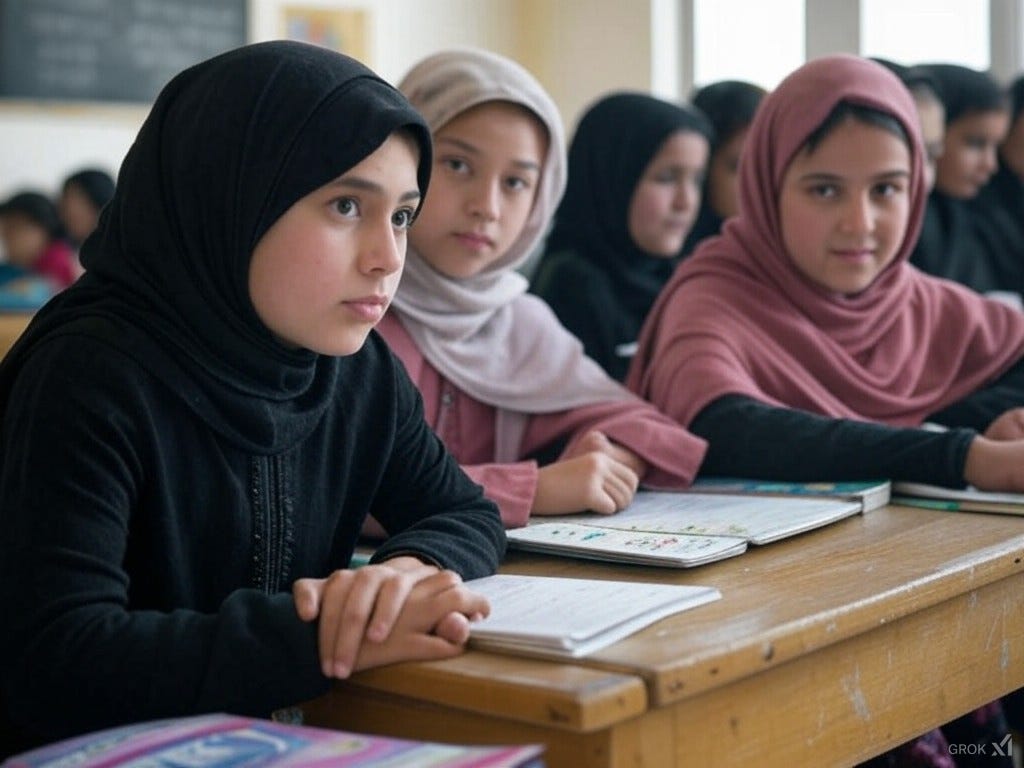
Afghanistan and Syria, both Muslim-majority and multi-ethnic developing countries, have had their political landscapes drastically altered and their social and educational systems severely impacted by decades of conflict. This has led to authoritarian regimes dominating public institutions, including education. Despite facing similar challenges, the two nations have taken different paths in politics and education. This essay compares and briefly explores the demographics, politics, and education in Afghanistan and Syria, highlighting both their similarities and differences, as well as the devastating effects of conflict on education. It also examines potential reforms for rebuilding Syria's education system, drawing on lessons learned from Afghanistan's experiences.
Historical and Political Contexts
In mid-August 2021, Afghanistan saw the Taliban's return to power with the fall of Kabul, abruptly ending the country’s brief experiment with democracy that had emerged in the early 2000s. This resurgence marked a regression into an ultra-religious totalitarian regime that has since suppressed civil liberties, dismantled democratic institutions, and dramatically altered educational policies (Amnesty International, 2021). The Taliban's ascent was characterized by a reliance on strict religious interpretations to govern public life, including stringent restrictions on education for women and the deployment of education as a means of ideological indoctrination (Nasir, 2024).
In contrast, Syria’s current de facto authorities emerged from the tumultuous aftermath of the Assad regime’s collapse after a decade-long civil war (International Crisis Group, 2021). The Syrian conflict, sparked by the Arab Spring uprisings in 2011, was rooted in widespread discontent with four decades of authoritarian rule under Hafez al-Assad and his son Bashar al-Assad (Kumar, 2024). The Assad’s Ba’athist party, who controlled the government, had historically used education as a tool to entrench political loyalty and suppress dissent. The Syrian Civil War not only resulted in significant human casualties and displacement but also left the nation’s educational infrastructure in ruins, with widespread destruction of schools, displacement of teachers, and millions of children out of school (Masud, 2018).
Demographic Comparisons
A basic yet crucial dimension of this comparative analysis involves demographics. Afghanistan, with an approximate population of 41 million, significantly surpasses Syria's population of around 20 million (World Bank, n.d.) Both nations have high percentages of Muslim populations—99.7% in Afghanistan and 92% in Syria (Pew Research Center, 2009). These demographic differences have critical implications for educational policies, resource allocation, and the scale of recovery efforts needed to rebuild their education systems.
Literacy rates and educational enrollment prior to recent conflicts provide insight into the educational foundations of these societies. Syria historically outperformed Afghanistan, boasting an adult literacy rate of 85% (77% for females) compared to Afghanistan's 43% (29% for females). Similarly, Syria's pre-conflict formal education enrollment rate was around 95%, with approximately 72% enrolled at the secondary level. Afghanistan lagged, with a total enrollment of 78% and about 55% at the secondary level as of 2014 (UNESCO Institute for Statistics, n.d.). These pre-conflict metrics show that Syria had a relatively highly educated population, which likely contributed to the high level of political awareness and civic engagement among Syrians before and during the war, even though education was heavily politicized.
Authoritarian Influence on Education
Both Afghanistan and Syria have endured long periods of authoritarian rule that transformed their education systems into mechanisms for indoctrination and control. Under the Assad regime, Syria’s educational system became a highly centralized apparatus with the sole aim of promoting Ba’athist ideology. Government ministries, under Ba’athist oversight, controlled schools and universities, stripping them of autonomy and fostering an environment where dissent was met with fear and repression. While the regime did expand access to public education and increased female enrollment, these measures were motivated by a political agenda aimed at consolidating power rather than genuine educational improvement (Tozan, 2023; Masud, 2018).
In Afghanistan, decades of conflict and authoritarian governance under various regimes saw education used as a tool for promoting ideological and sectarian agendas. The Taliban’s approach to education, especially during their previous rule in the 1990s and now post-2021, has been marked by repressive policies, particularly restricting female education and imposing an extremist curriculum aligned with their strict interpretation of Islam. The Taliban’s policies have reversed many of the gains made during the brief democratic early 2000s to August 2021, where efforts had been underway to reform the education system and make it accessible for everyone (Nasir, 2024).
Impact of Conflict on Educational Infrastructure
The civil wars in both Syria and Afghanistan have devastated educational infrastructure, leading to long-term societal and economic consequences. In Syria, the conflict has resulted in the largest refugee crisis in the world, with over 5.5 million refugees, half of whom are children (Veale, 2020). The destruction of schools, the displacement of teachers, and the broader disruption of public services have created a generation of children deprived of education, with significant implications for the country’s future (Van Dam, 2017).
Similarly, Afghanistan has suffered from decades of warfare that have disrupted education at all levels. The shift in power to the Taliban led to the dismantling or significant curtailment of many educational programs, especially affecting girls and women, who find themselves barred from accessing education beyond primary levels under the current regime’s policies.
Divergent Trajectories in Educational Policy
Despite similar challenges wrought by conflict and authoritarian control, the educational trajectories of Syria and Afghanistan exhibit important divergences, particularly regarding future prospects. The Syrian de facto authorities, currently under the leadership of Hayat Tahrir al-Sham (HTS), are at a pivotal moment, grappling with its complex history of extremism and widespread skepticism. Their immediate objectives, as they have stated, include restoring essential public services and forging agreements with other rebel groups to determine the future political system (Al Jazeera, 2024). Education stands as a critical frontier in this endeavor, with significant ambiguity about its future direction.
The HTS commands caution among Syrians of different political persuasions due to its complex origins; until 2016, HTS was affiliated with al-Qaeda and, prior to that, with ISIS (International Crisis Group, n.d.). Unlike the Taliban, HTS does not have complete control over Syria. Instead, it shows similar political patterns to those seen in Afghanistan after the Soviet-backed government, when the Mujahideen - the seven main groups that fought the Soviet and its allies - took Kabul in 1992. However, they soon began fighting among themselves over how to share power, which led to a civil war and eventually the rise of the Taliban (Rutting, 2014). Similarly, HTS is not the only dominant force in the post-Assad era. The Syrian Democratic Forces (SDF) control a significant part of the country, and many smaller groups also wield power. Moreover, HTS is not a single, unified organization, but rather a collection of different factions (Zarea, 2018).
This political landscape has significant implications for educational policy development. Formulating a unified educational framework is a major challenge due to the many factions with differing views. The different actors with distinct ideologies make it hard to design curricula and policies that please all stakeholders. However, the lack of a dominant group with extreme ideology creates a more favorable environment for dialogue. This political context allows for negotiations and flexibility in educational policy. In the best-case scenario, achieving a joint political consensus on educational policy requires finding common ground among disparate groups and creating collaborative spaces that respect dialogue, preventing any one group's ideological agenda from dominating.
Early signs indicate that Syria may not follow the same path as Afghanistan, but it's too soon to grasp the full patterns and dynamics that will influence education policy. Reports suggest the new Syrian authorities plan to let girls and women keep accessing education, a significant shift from the Taliban's restrictive approach. The authorities have made some preliminary curriculum changes, such as removing Assad-era propaganda materials, although there are worrying signs, like the ban on certain scientific theories (CNN, 2025), that might signal a move towards ideological control similar to totalitarian regimes.
In Afghanistan, the Taliban have explicitly stated their intention to utilize education as a means to propagate their extreme beliefs (Nasir, 2024). Since assuming power, they have undermined democratic institutions, centralized decision-making, and marginalized specific groups, particularly women and girls (Amnesty International, 2021). Under their governance, the focus of education has shifted back to promoting their ideology, rather than fostering free thought, scientific inquiry, and access for all (Nasir, 2024).
Potential Futures for Syrian Education
The future of Syria's education system hinges on the political decisions made by the new authorities and how willing they are to adopt reforms that promote quality education for everyone, rather than those that maintain authoritarian control and ideological indoctrination. Three possible scenarios come into play:
Education for everyone: In the best-case scenario, Syria could have an education policy that works for everyone. This would mean making education available to all, as well as providing schools for marginalized groups, like those affected by the Assad regime's policies, communities displaced by war, minorities, and women, to help them overcome education barriers. In this scenario, the education system would promote democratic values, free thinking, objective knowledge, and comprehensive skills training, while rejecting radicalism, indoctrination, and discrimination. This would bring about long-term healing, social unity, and alignment with global standards. To make this happen, Syria would need to invest heavily in educational infrastructure, teacher training, and curriculum development, and ensure that policy-making reflects the needs of Syrian society.
Failing to improve the system: A less transformative scenario involves a policy that fails to address the underlying problems and challenges. This approach risks perpetuating existing problems with access and education quality, as it does not provide support to those who have been out of school, struggle to complete their education, or received low-quality education due to the conflict and authoritarian rule. The system would likely maintain the status quo, where only a small portion of the population has access to quality education, and those on the margins remain deprived of opportunities to achieve better learning outcomes. This outcome would undermine efforts to break cycles of poverty and disenfranchisement that have plagued Syria for decades.
Totalitarian and Indoctrination-Based System: The worst scenario envisions a reversion to an education system that mirrors the authoritarian, indoctrination-laden policies (Salajan & Jules, 2024) seen under the Assad regime and currently under the Taliban’s rule in Afghanistan. In such a system, education would serve primarily to entrench the power of the ruling elite, suppress dissent, and propagate radical ideological narratives. This would stifle free thinking, innovation, and social mobility, leaving both affluent and marginalized populations with an education that serves narrow political purposes rather than fostering genuine development. Historical precedent suggests that such approaches are unsustainable in the long term, as they hinder national transformation and often lead to eventual collapse or instability, as seen in the downfall of authoritarian regimes.
Challenges and Considerations for Rebuilding Education
Rebuilding the educational system in Syria—or transforming it into a better, democratic institution—is fraught with challenges. Beyond the ideological direction, the process demands substantial resources, effective governance, and community engagement.
Resource Allocation and Partnerships: Reconstructing the damaged education infrastructure and developing a robust educational system will require significant investment. Given the financial constraints of a post-conflict nation, relying solely on public funding is insufficient. Instead, Syria must forge partnerships with the private sector, non-governmental organizations, and international donors. Multi-layered cross-sector partnerships, deeply committed to shared responsibilities, are essential. Such collaborations should not only provide funding but also bring technical expertise, pedagogical innovation, and management best practices to ensure the effective delivery of education services.
Governance and Implementation Capacity: The success of any education policy hinges on effective governance and implementation. Even well-conceived policies can fail without functional institutions capable of executing reforms. Lessons from Afghanistan’s experience during its brief democratic period demonstrate that policy documents without robust implementation structures remain unfulfilled promises. Syria needs to develop an administrative framework that minimizes bureaucracy, decentralizes decision-making, fosters local autonomy, and combats corruption. Strengthening the capacity of the Ministry of Education and local education authorities to manage resources, monitor progress, and adapt to community needs is critical for the longevity and impact of reforms.
Societal Participation and Democratic Engagement: The direction of Syria’s education policy will also be influenced by civic participation. An engaged and informed citizenry can hold authorities accountable and advocate for policies that reflect their needs and aspirations. Building such a participatory culture requires not just policy proclamations but efforts to foster democratic norms, encourage dialogue among different groups, and empower communities to take part in shaping the future of their education system. This cultural shift towards democratic engagement can also mitigate the risk of education being co-opted for ideological indoctrination.
Comparing the Syrian and Afghan Experiences
A comparative reflection on Afghanistan’s experience under Taliban rule provides salient lessons for Syria. The Taliban’s approach to education has led to unprecedented levels of oppression, particularly against women and marginalized groups, and has hindered social and economic development. If Syria were to mirror this model, the consequences would be detrimental. Conversely, Afghanistan’s attempts at educational reform during its brief democratic period offer a contrasting vision—one where education was seen as a path to empowerment, growth, and social transformation. While these efforts faced many obstacles and ultimately fell short due to political instability, they still provide a blueprint for what might be possible with sustained commitment and governance.
The Way Forward for Syria
As Syria navigates its uncertain future, the choices made by its de facto authorities regarding education will have profound implications. An ideal education policy presents the best opportunity for national healing and sustainable development. Such a policy would need to:
Ensure universal access while addressing the unique challenges faced by marginalized communities.
Promote critical thinking, scientific inquiry, and creativity to prepare students for a dynamic global future.
Resist the temptation to use education solely as a tool for political indoctrination, learning from past missteps in both Syrian and Afghan contexts.
Build resilient institutions capable of delivering on policy promises and adapting to changing circumstances.
Engage local communities and international partners in a collaborative effort to rebuild and reform the education system.
The Syrian case underscores the complex interplay of political dynamics, ideology, and the societal role of education in post-conflict reconstruction. The path chosen by Syrian leaders in the coming months and years will determine not only the direction of education but also its capacity to serve as a catalyst for broader social transformation. Learning from Afghanistan’s experiences, Syrian policymakers must navigate the pressures of authoritarian tendencies, resource constraints, and the need for participatory governance to forge a resilient and better educational future.
Conclusion
In comparing Afghanistan and Syria, it becomes clear that while both nations share a history of conflict and authoritarian control, their potential paths forward in education are not predetermined. The interplay of demographics, political ideologies, and societal demands suggests multiple trajectories, each with distinct implications for the future of education and society. The Syrian education system stands at a crossroads: it can either fall prey to the same totalitarian traps as seen in Afghanistan or during the Assad's regime in Syria, continue the cycle of indoctrination, or seize the opportunity to implement reforms that heal a war-torn society. The choices made today will reverberate for generations, underscoring the critical importance of thoughtful and forward-looking education policy in shaping Syria's path towards a democratic and prosperous future.
References:
Al Jazeera. (2024, December 15). What to know about Syria’s new caretaker government. https://www.aljazeera.com/news/2024/12/15/what-to-know-about-syrias-new-caretaker-government
Amnesty International. (2024, August). Afghanistan: Three years of Taliban rule and international inaction have left Afghan community with little hope. https://www.amnesty.org/en/latest/news/2024/08/afghanistan-three-years-of-taliban-rule-and-international-inaction-have-left-afghan-community-with-little-hope/
Benavot, A., Bella, N., Joshi, P., & McWilliam, A. (2016). From Gender Parity to Gender Equality: Situating Gender in the Monitoring of International Education Targets. Bildung und Erziehung, 69(3), 305–324. https://doi.org/10.7788/bue-2016-0305
CNN. (2025, January 2). Changes to Syria's school curriculum spark online outrage. https://www.cnn.com/2025/01/02/middleeast/changes-to-syrias-school-curriculum-spark-online-outrage/index.html
Crisis Group. (2021). After ten years of war, conflict still paralyzes Syria. https://www.crisisgroup.org/middle-east-north-africa/eastern-mediterranean/syria/after-ten-years-war-conflict-still-paralyses-syria
Devakumar, D., Birch, M., Rubenstein, L. S., Osrin, D., Sondorp, E., & Wells, J. C. (2015). Child health in Syria: recognising the lasting effects of warfare on health. Conflict and health, 9, 1-4.
International Crisis Group. (2025). Key decisions loom as Syria enters a new era. Retrieved April 17, 2025, from https://www.crisisgroup.org/middle-east-north-africa/east-mediterranean-mena/syria/key-decisions-loom-syria-enters-new-era
Kozol, J. (2012). Savage Inequalities: Children in America’s Schools. The Crown Publishing Group.
Kumar, S. (2024). Syrian Refugee Crisis: An Overview. IUP Journal of International Relations, 18(2).
Lanahan, Brian. Post-Conflict Education for Democracy and Reform : Bosnian Education in the Post-War Era, 1995–2015. 1st ed. 2017. London: Palgrave Macmillan UK, 2017. Web.
Masud, M. (2018). Authoritarian claims to legitimacy: Syria's education under the regime of Bashar al-Assad. Mediterranean Studies, 26(1), 80-111.
Nasir, Enayat. (2024). How the Taliban are seeking to reshape Afghanistan’s schools to push their ideology. The Conversation. https://theconversation.com/how-the-taliban-are-seeking-to-reshape-afghanistans-schools-to-push-their-ideology-241087
Paulson, J. (Ed.). (2020). Education and reconciliation : exploring conflict and post-conflict situations (1st ed.). Bloomsbury Academic. https://doi.org/10.5040/9781350091245
Pew Research Center. (2009, October 7). Mapping the global Muslim population. Pew Research Center. https://www.pewresearch.org/religion/2009/10/07/mapping-the-global-muslim-population10/
Rohwerder, B. (2015). Delivering education during conflict.
Ruttig, T. (2014). Afghanistan between democratization and civil war: post-2014 scenarios. Afghanistan, Pakistan and Strategic Change, 171-200.
Salajan, F. D., & jules, T. D. (2024). The Global Resurgence of Authoritarianism and Its Existential Threats to Education: Implications for Scholarship in Comparative and International Education. Comparative Education Review, 68(3), 319-344.
Tozan, O. (2023). The evolution of the Syrian higher education sector 1918-2022: from a tool of independence to a tool of war. Globalisation, Societies and Education, 1-15.
UNESCO Institute for Statistics. (n.d.). Data. Retrieved from https://data.uis.unesco.org/Index.aspx?queryid=166
Van Dam, N. (2017). Destroying a nation: The civil war in Syria. Bloomsbury Publishing.
Veale, A. (2020). Conflict-driven social change: the case of Syrian children and youth. Current opinion in psychology, 35, 114-118.
World Bank. (n.d.). Population, total - Afghanistan. Retrieved from https://data.worldbank.org/indicator/SP.POP.TOTL?locations=AF
Zarea, Y., & Maier, S. (2018). Recent Developments of US and Turkish Involvement in the Syrian Conflict.