

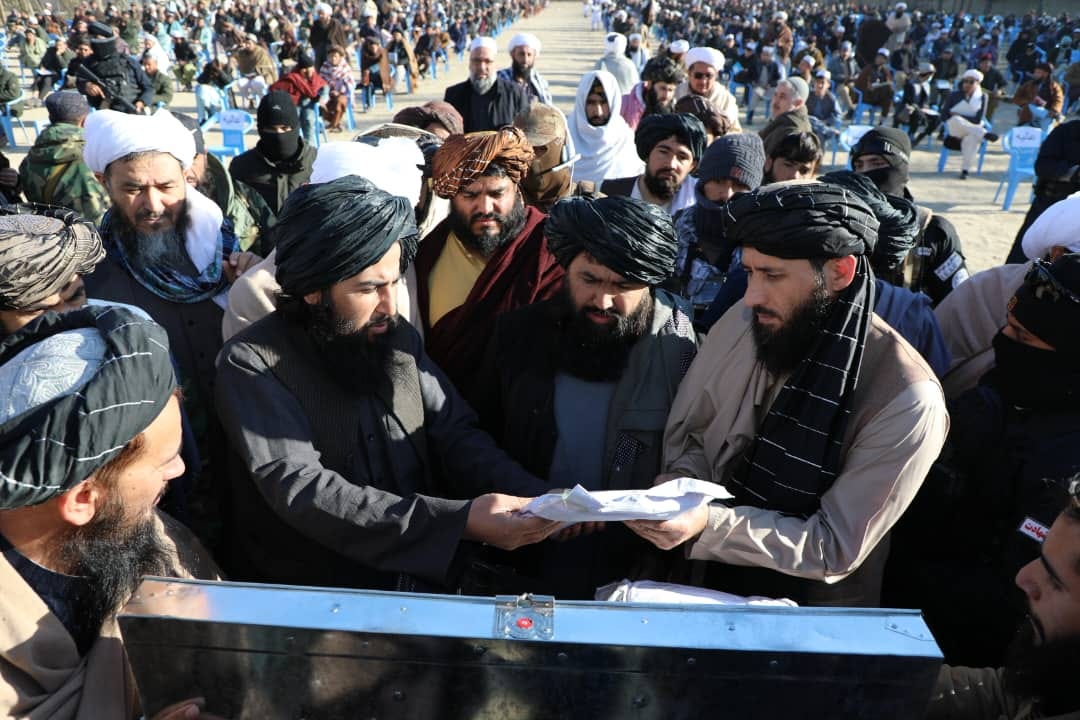
The de facto authority in Afghanistan is set to confer graduate credentials to 51,000 graduates of religious institutions and their affiliates. This will happen through an unprecedented by the so-called degree-by-examination process. It includes a written test, a monograph submission, and an oral defense.
The de facto authority claims this modernizes the old religious institutions. They view it as a necessary advancement without offering much justification. However, upon closer review, this scheme has received much criticism for its tremendous flaws and contradictions.
In examining the motives behind the scheme, to what extent does the Taliban exhibit trust in Higher Education (HE)? What motivates the Taliban to incorporate the modern concept of diplomas into their traditional religious teaching institutions?
Since the Taliban's rise to power, they have enacted many rules to suppress Higher Education Institutions (HEIs), including issuing over 13 orders to prohibit women from higher education progressively. By late April 2022, they required separate university classrooms for men and women. Just six months later, women were excluded from certain study fields. By year's end, this expanded to a complete ban on women in all public and private universities.
Their opposition to HE is not limited to gender discrimination; it affects various organs and functions of HEIs. For instance, hiring faculty is now a joint task of the Ministry of Higher Education (MoHE) and the Intelligence Directorate. The former proposes candidates, while the latter vets them for ideological background.
They also interfere with banning books and altering curriculums to match their beliefs. It appears that no part of the higher education system is immune to these extensive interventions.
With such adversity toward HE, why will they adopt it as a model for reforming the seminaries?
Second, the scheme contradicts the country's norms and international higher education standards. The norms only allow accredited Higher Education Institutions (HEIs) to grant graduate degrees, and they can only do so after meeting the essential criteria. These require students to earn the necessary credits and meet all the program's requirements to get a master's degree.
Conversely, the de facto government offers degrees to those who have:
Never been to a formal school
Taught non-formally only in religious institutions
Affiliation with the Taliban
The Ministry of Higher Education (MoHE) is an administrative and bureaucratic organ that organizes and oversees the HEIs. It does not directly deliver academic programs and accreditation, so it lacks the authority to issue degrees of any kind.
Even if it had it and chose to grant full autonomy, there would be big technical and logistical hurdles. Doing such a large exam would require thousands of Ph.D. holders. They must have academic experience and work for several months. Each examiner would need about two hours to grade an exam paper. It would take them four hours to assess a monograph. They would also need an extra four hours for the defense. Altogether, this equates to a minimum commitment of eight hours or one full working day per candidate. For all the candidates combined, this process would necessitate over 51,000 working days.
Administering the exams even with the authority's criteria is impossible—it would fail to ensure the minimum standards and transparency.
Then, what is the scheme for, and what does the de facto authority try to get from it? why will they replicate a model they don't trust?
The scheme is primarily politically motivated and simple to understand. Most in the Taliban come from backgrounds without formal education, having been instructed informally in religious seminaries. After seizing power, they occupied positions within government institutions, predominantly in leadership and management, without the requisite job qualifications. A significant deficiency is their lack of formal, modern educational credentials. The MoHE implements the scheme to bridge this gap before implementing new legislation to set basic hiring standards for the public sector.
Obtaining modern degrees has become essential for them to maintain their positions and legitimize their rule. These qualifications act as instruments to uphold their authority and lend legitimacy to their governance.
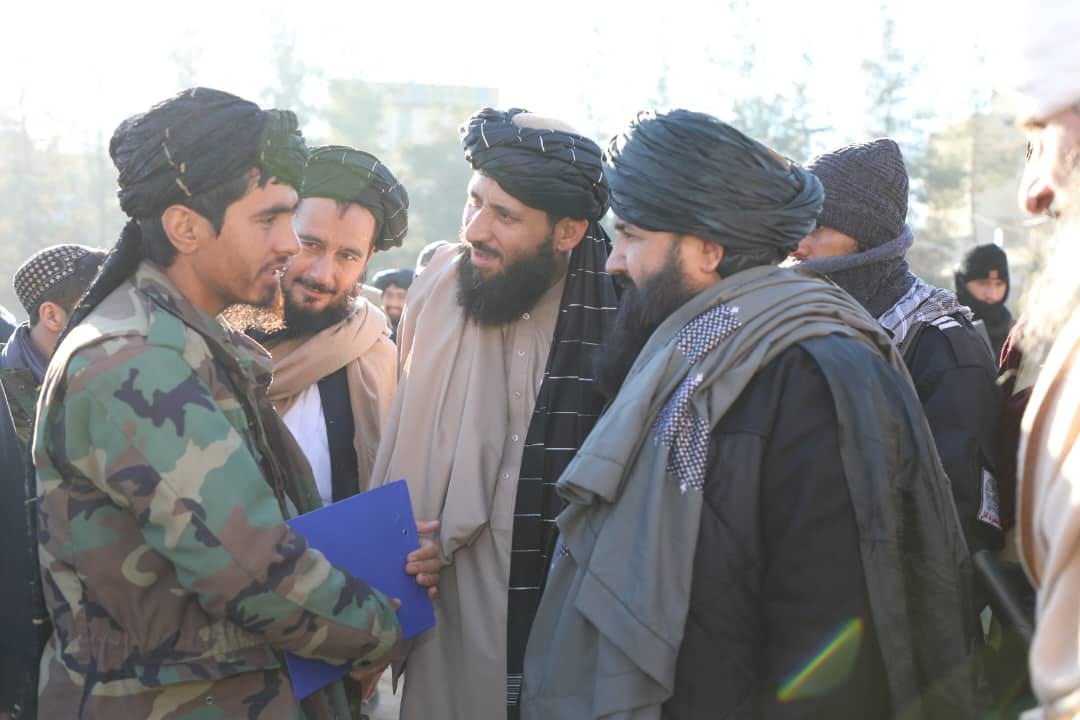
This scheme undermines the integrity of the Afghan HE system, transforming it into a mere diploma-producing factory that aligns solely with the Taliban's ideological agenda and strengthens its regime. The Taliban's objective is to cultivate a workforce deeply ingrained with its doctrines, seeking devoted followers who will follow its directives without question.