

Introduction
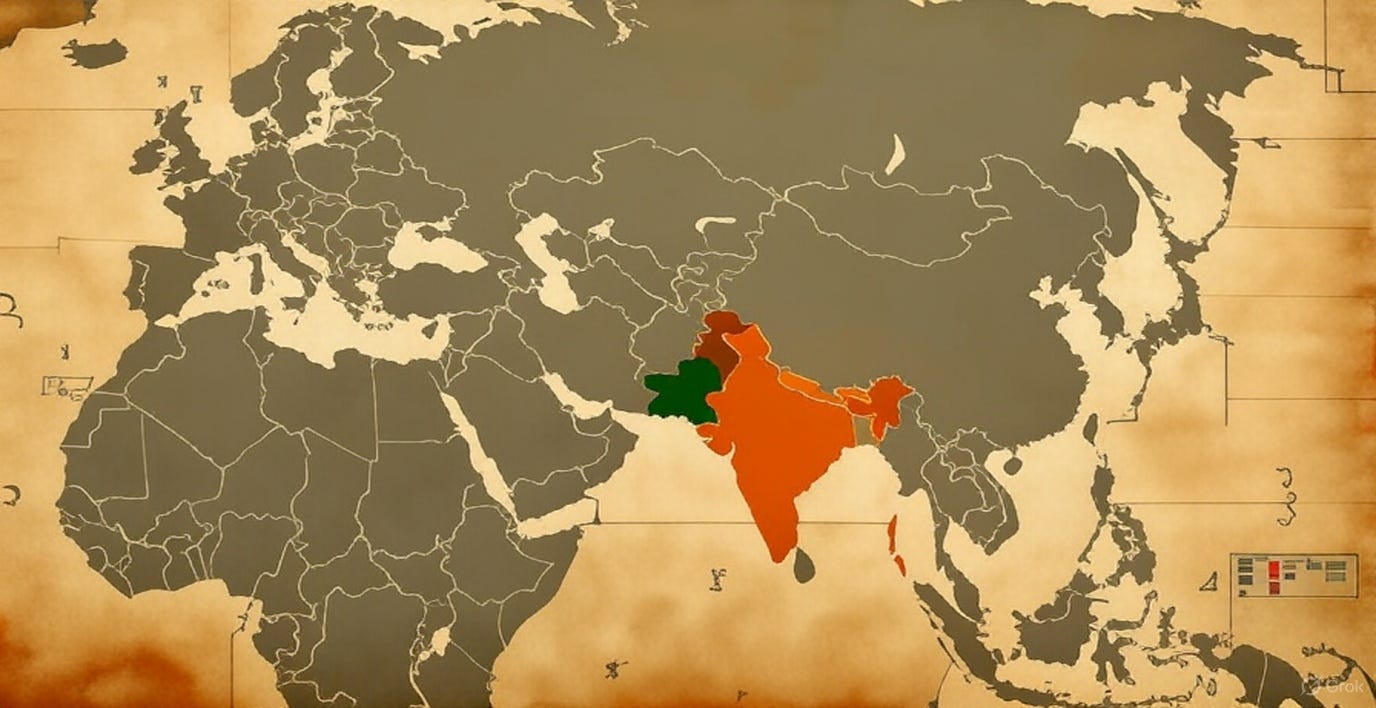
This essay compares two national education policies: India’s National Education Policy (1992 version) and Pakistan's National Education Policy (NEP), introduced in 1998. Specifically, it assesses the Indian policy from 1992 to 2010 and the Pakistani policy from 1998 to 2010, concluding at the point when a new NEP was introduced. The assessment employs three key dimensions: policy context, content, and outcomes.
Selecting these two policies is instructive for several reasons. Both India and Pakistan gained independence from Britain in August 1947, separated by a religiously motivated partition. India, with a Hindu majority, established a secular democracy, while Pakistan adopted an Islamic orientation—differences that have shaped their respective educational visions. India’s NEP emphasizes free and equitable access, whereas Pakistan’s NEP restricts equal access through the interplay of national and Islamic identities. Both policies, however, seek to prepare learners for globalized, knowledge-based economies. Furthermore, India and Pakistan have populations exceeding one and a half billion, underscoring their regional and international significance. The extensive literature on these policies enables a more robust and objective appraisal.
This essay first conceptualizes the criteria for policy success and failure and then applies these criteria to India’s and Pakistan’s NEPs. It presents the arguments for India’s policy exhibiting relative success while Pakistan encounters failures. The final section synthesizes lessons learned and addresses future policy directions, highlighting implications for equitable, effective education reform in both national contexts.
Conceptualizing the Assessment
The framework assesses the two policies based on three key dimensions: context, content, and outcomes. To make a fair judgment, I considered each policy's broader ecosystem – the context (Lawson et al., 2007) in which it was formed and implemented, analyzed its content (Jie, 2016; Polski & Ostrom, 1999) through the lenses of social justice and equity and its implementation frame; the process and actors, and evaluated its outcomes on specific areas (Lawson et al., 2007) to determine its effectiveness.
The essay begins by conducting a Contextual Assessment in each case, briefly discussing the context that led to the policy's creation. It explores how the socio-political climate and the legacy of colonial education shaped the education policy and what formal or informal institutional rules shaped the policy environment.
Next, I conduct a Content Assessment, examining the policy's goals and objectives through Social Justice and Equity lenses. This includes examining the underlying assumptions in the content and identifying gaps. The framework also briefly examines the actors and processes in the policy by identifying the key actors (government agencies, civil society, private sector, international organizations) and their roles. It also examines how stakeholders interact within the institutional framework to shape policy outcomes.
Finally, the essay concludes with an Outcome Assessment, which evaluates the policy's effectiveness in reducing out-of-school children, improving enrollment, and achieving gender parity. This section explores the policy's measurable impacts on targeted populations, its effects on equity and social justice, and any unintended consequences or systemic ripple effects. It also examines whether the policy is sustainable regarding resources and public support, ultimately determining its success or failure.
The assessment looks at where the policy has failed to meet its objectives, whether it has caused any adverse outcomes or consequences, and where the problems are—whether they are with the policy itself, how it was implemented, or both.
NEPs Assessment
This section begins by evaluating the Indian National Education Policy (NEP) and then assesses the Pakistan National Educational Policy. Each policy will be analyzed based on three components: context, content, and outcomes. The essay concludes with a discussion of the successes and shortcomings of these policies.
The Case of India - NEP (1992)
Contextual Assessment
The NEP of 1968, introduced two decades after India's independence, sought to reform the colonial education system and ensure compulsory education for all children (Bhandari & Mathew, 2022). Revised in 1992 amid significant political and economic changes, the policy emphasized universal access to quality elementary education, particularly for girls and marginalized groups. It aimed to allocate 6% of GDP to education. The environment for implementing this policy was favorable, with broad support from major political parties and civil society actors for its vision (Kalyani, 2020; Little, 2010).
The policy was adjusted and reformed to fit the context, adapting various national and local programs and initiatives. This included enhancements to primary school infrastructure, decentralized educational planning with greater local autonomy to foster equity, and introducing a standardized common entrance exam for professional and technical programs in 2005 (Agarwal & Jain, 2023). Overall, the environment for policy formation and implementation was positive.
Content Assessment
The 1992 revised National Education Policy (NEP) established free and compulsory education for all children (Little, 2010). Its objective was to reduce disparities by addressing the needs of marginalized groups, including minorities and individuals with disabilities, through initiatives such as scholarships, adult education, and incentives for school attendance, particularly for women, marginalized castes, and tribes (Kalyani, 2020; Nambissan, 1996). The policy upheld its secular nature, which was in line with the Indian constitution, ensuring it did not promote any specific religion or faith. It aimed to cultivate national identity and citizenship through secular and diverse values, requiring all educational programs to adhere to these principles (Agarwal & Jain, 2023).
Outcomes
The NEP has made significant strides in increasing access to education, particularly for marginalized groups, between 1990 and 2010, which is the focus of this essay. For example, female enrollment surged, with the ratio improving from 71 girls per 100 boys in 1990-91 to 92 in 2009-10. Similar trends emerged in upper primary, secondary, and senior secondary levels (MHRD, 2016). By 2010-2011, primary school enrollment had soared to 99.6%. Initiatives like mid-day meals and better school facilities drove this progress. Literacy rates also significantly improved, jumping from 52.5% to 67.6%. Women's literacy rates rose from 34% to 59% (MHRD, 2016).
The policy provided a comprehensive framework that brings together diverse stakeholders and partners to ensure effective implementation. The Ministry of Human Resource Development oversaw its execution, while national research and training institutions developed the curriculum, teaching methods, and capacity-building initiatives (Little, 2010). Advisory committees comprising civil society, experts, and government bodies offered important equity and decentralized planning recommendations. The state governments implemented the policy (Little, 2010).
Despite these successes, some obstacles persisted – mainly on the policy's implementation side. Implementation gaps, inadequate resources, and poorly designed action plans blocked progress and limited civil society participation (Khare, 2015; Little, 2010). Teacher training programs fail to adequately support marginalized learners (Kalyani, 2020; Nambissan, 1996). Moreover, financial constraints posed a significant hurdle, with public spending on education stuck at 4.43% of GDP by 2017-18, far short of the 6% target (Agarwal & Jain, 2023). Caste-based inequalities continued to restrict access to quality education(Nambissan, 1996).
The Case of Pakistan – National Education Policy (NEP)
Contextual Assessment
Pakistan’s third NEP, introduced in 1998, followed the relatively secular 1970 and more faith-oriented 1979 policies. This shift occurred after Bangladesh’s independence and amid rising tensions with India and Soviet involvement in neighboring Afghanistan. Education thus became a strategic instrument for nation-building, catalyzing the rapid growth of privately run madrassas, which operated largely outside state oversight (Sajjad, 2020; Zia, 2003).
Shortly after the NEP's introduction, General Pervez Musharraf's 1999 coup disrupted its democratic underpinnings by restricting civil liberties and political participation (Mubarak et al., 2024). Although designed for a pluralistic governance structure, the policy faced constraints in an authoritarian regime. Internal inconsistencies persisted: Madrassas were excluded from the national education framework, and instruction prioritized Urdu over mother-tongue education in provinces, limiting the policy's inclusivity and effectiveness (Rassool & Mansoor, 2007).
Content Assessment
The 1998 NEP aimed to foster national unity through nationalist teachings while advancing Islamic education. However, its simultaneous push for global competitiveness and a narrowly defined Pakistani Muslim identity created contradictions (Waqar et al., 2024)—non-citizens, such as refugees, and religious minorities, including Hindus and Christians, experienced marginalization.
The policy overlooked linguistic diversity by centralizing curricula, limiting school autonomy, and failing to integrate madrassas effectively. Curriculum reforms placed Islamic values above inclusive, critical thinking, exacerbating social divisions. Though various stakeholders—governments, NGOs, and community leaders—were initially involved, the 1999 coup introduced martial law and curtailed civil society participation. Consequently, the NEP was implemented top-down, undermining grassroots engagement and reinforcing rigid, faith-based educational priorities (Hoodbhoy, 2014; Zia, 2003).
Outcome Assessment
Implementation shortfalls led to limited overall progress. In 1998, literacy stood at 45%, with stark disparities across urban (63%) and rural (35%) populations; by 2010, it had risen to 58%, yet roughly 25 million children remained out of school (Ahmed et al., 2020; Majoka & Khan, 2017). Madrassas multiplied from 5,000 to 20,000, enrolling 1.8 million students, mainly in underserved areas (Sajjad, 2009).
Chronic underfunding—below 2% of GDP—combined with severe teacher shortages and inadequate facilities (e.g., 40% of schools lacked water, electricity, or toilets) perpetuated inequalities (Ahmed et al., 2020; Majoka & Khan, 2017). Corruption diverted resources, while bureaucratic inefficiencies and ideological divisions further stalled reform efforts (Qureshi et al., 2007). By 2010, the recognized need for structural change spurred the development of a new policy, but deep-seated underinvestment and weak administrative oversight continued to impede equitable, high-quality education (Ahmed et al., 2020; Kiani, 2010).
Assessment of Policy Success and Failure
This evaluation draws on three key criteria: (1) the adaptability and responsiveness of the policy to its sociopolitical and cultural context, (2) the inclusivity of its content, and (3) the tangible outcomes it generated.
Indian Policy: Indicators of Success
Contextual Responsiveness: The Indian policy consistently adapted to evolving circumstances, introducing reforms and initiatives aligned with changing social and economic needs.
Inclusivity and Secular Orientation: By prioritizing equity and secular values, the policy avoided religious or ethnic biases and ensured broad stakeholder representation.
Decentralization and Diverse Stakeholder Engagement: Decentralized structures involving local governments, institutions, and communities fostered practical implementation and diverse participation.
Positive Outcomes: Increased enrollment rates, reduced achievement gaps, and wide-ranging improvements in equity underscore its effectiveness.
Pakistani Policy: Indicators of Failure
Lack of Adaptation to Changing Contexts: Designed for a specific environment, the policy faltered when circumstances shifted, ultimately losing relevance and support.
Centralization and Indoctrination: Standardized curricula and limited school autonomy led to a rigid, centralized system, while madrassas radicalization remained unaddressed and unreformed.
Modest and Uncertain Outcomes: Although some improvements occurred, there is little evidence that they resulted from the policy. Abandonment within a decade, without substantive reform, further illustrates its shortcomings.
In short, India’s policy thrived on responsiveness, inclusivity, decentralization, and demonstrable gains, whereas Pakistan’s policy failed to adapt, remained centralized and exclusionary, and did not yield meaningful, policy-driven results before being set aside.
Lessons for Future Policymaking
Prioritize Social Justice and Equity: Education policies must be grounded in social justice and equity principles, avoiding indoctrination based on language, religion, or other identity markers. By serving diverse populations, particularly marginalized groups, policies help create a more inclusive education system.
Remain Contextual and Adaptable: Policies should be informed by thorough assessments of "broader institutional context" (Meyer & Rowan, 2006) and remain flexible enough to evolve with changing circumstances. Treating policies as "living documents" (Freeman & Maybin, 2011) ensures they can address new challenges and opportunities without losing their foundational purpose.
Address Key Challenges Head-On: A well-designed policy identifies and addresses "complex problems" (Lawson, 2018) rather than leaving them unaddressed or vaguely referenced. In cases like Pakistan's madrassas, failing to integrate targeted reforms resulted in long-term setbacks and deepened existing problems.
Ensure Comprehensive Content: While clarity is essential to avoid ambiguity, policies must allow room for innovation and "complex change" (Lawson, 1999). Specificity should guide action, yet sufficient flexibility should be retained for adapting to future developments.
Maintain relevance as a Living Document: Effective policies build on previous successful patterns and incorporate lessons learned through "collaboration research" (Lawson, 2004) and dialogue. Regular updates, refinements, and realignment with current needs help maintain policy credibility and impact.
Adopt a Blended Approach: Overly "top-down" (Bolman & Deal, 2017) or hierarchical policymaking may stifle stakeholder engagement. Instead, a balanced approach—combining central oversight with bottom-up input—fosters more inclusive, contextually responsive solutions.
Foster Inter-Professional and Broad Partnerships: Policy must emphasize, in accordance with Lawson's (2014) emphasis on inter-professional collaboration partnerships with government agencies, civil society, local communities, private sectors, and international organizations to strengthen implementation and sustainability. Effective communication, shared responsibilities, and a common commitment to resolving educational challenges are key.
Conclusion
This essay evaluated the national education policies of India and Pakistan through the lens of context, content, and outcomes. This framework facilitated a comprehensive analysis of how each policy responded to its specific sociopolitical environment and assessed the effectiveness of its implementation.
India's case presents a successful example. The National Education Policy in India has been contextually relevant and adaptable, evolving to address emerging needs while upholding social justice and equity principles. It established a solid framework that encouraged decentralization and school autonomy, resulting in significant improvements in enrollment, enhanced learning opportunities for marginalized groups, and overall literacy rates.
Conversely, Pakistan's National Education Policy (1998–2010) fails to address critical educational issues. Its focus on nationalist and faith-based ideologies marginalized religious minorities and non-citizens. Additionally, the policy did not adapt to contextual changes or political instability, which hindered its effectiveness and led to unsatisfactory outcomes.
The insights for future policymakers highlight the necessity of an inclusive vision and the creation of comprehensive and adaptable policies. Future education policies should be regularly reassessed to align with contextual changes and actively engage diverse stakeholders, fostering strong partnerships to ensure sustained progress and equitable outcomes.
References
Agarwal, A., & Jain, M. (2023). Education Policy in India: A Comprehensive Overview. Research International Journal, (12)1.
Ahmed, Z., Khan, S., Saeed, S., & Haider, S. I. (2021). An Overview of Educational Policies of Pakistan (1947-2020). Psychology and Education Journal, 58(1), 4459-4463.
Bhandari, U., & Mathew, D. J. (2022). A Critical Review of National Education Policy 2020: Role of Twenty-First-Century Skills and Scope of Design Education in Indian Schools. The International Journal of Design Education, 17(1), 21–35. https://doi.org/10.18848/2325-128X/CGP/v17i01/21-35
Bolman, L. G., & Deal, T. E. (2013). Reframing organizations: Artistry, choice, and leadership (5. ed). Jossey-Bass.
Freeman, R., & Maybin, J. (2011). Documents, practices and policy. Evidence & Policy, 7(2), 155-170.
Freeman, R., & Maybin, J. (2011). Documents, practices and policy. Evidence & Policy, 7(2), 155–170. https://doi.org/10.1332/174426411X579207
Hoodbhoy, P. (2014). Education reform in Pakistan–Challenges and prospects. Pakistan: Haunting Shadows of Human Security, edited by Jennifer Bennett, 58.
Jie, N. D. (2016). Towards a framework of education policy analysis. THF Literature Rev, 9781003002666-8.
Kalyani, P. (2020). An empirical study on NEP 2020 [National Education Policy] with special reference to the future of Indian education system and its effects on the Stakeholders. Journal of Management Engineering and Information Technology, 7(5), 1-17.
Khare, M. (2015). Education aid and international cooperation in India: Shifting dynamics, increasing collaboration. In International education aid in developing Asia: Policies and practices (pp. 157-195). Singapore: Springer Singapore.
Kiani, A. K. (2010, May). The role of education on economic growth in Pakistan. In The Fifth Conference of Learning International Networks Consortium (LINC).
Lawson, H. A. (1999). Journey Analysis: A Framework for Integrating Consultation and Evaluation in Complex Change. Journal of Educational and Psychological Consultation, 10(2), 145-172.
Lawson, H. A. (2004). The logic of collaboration in education and the human services. Journal of interprofessional care, 18(3), 225-237.
Lawson, H. A. (2014). A Research and Development Framework for Interprofessional Team Collaboration. Albany, NY.
Lawson, H. A. (2018). Redesign as an adaptive problem facilitated by theories of change. In Redesigning Physical Education (pp. 65-85). Routledge.
Lawson, H. A., Claiborne, N., Hardiman, E., Austin, S., & Surko, M. (2007). Deriving Theories of Change from Successful Community Development Partnerships for Youths: Implications for School Improvement. American Journal of Education, 114(1), 1–40. https://doi.org/10.1086/520690
Little, A. W. (2010). Access to elementary education in India: Politics, policies and progress. CREATE Pathways to Access Research Monograph No, 44.
Majoka, M. I., & Khan, M. I. (2017). Education Policy Provisions and Objectives. A Review of Pakistani Education Policies. Italian Journal of Sociology of Education, 9(06/2017), 104–125. https://doi.org/10.14658/pupj-ijse-2017-2-6
Meyer, H.-D. B. Rowan(Ed.). (2006). The new institutionalism in education. State Univ. of New York Press.
MHRD (2016). Education at a Glance 2016. Government of India. Ministry of Human Resources Development. DEPARTMENT OF SCHOOL EDUCATION & LITERACY NEW DELHI 2016.
MHRD (n.d.). National Education Policy 1992. Government of India. Ministry of Human Resources Development.
Mubarak, A., Nawaz, S., & Khalid, J. (2024). The future of Democracy in Pakistan: Opportunities and Challenges. Journal of Politics and International Studies, 10(1), 197-211.
Nambissan, G. B. (1996). Equity in education? Schooling of Dalit children in India. Economic and political weekly, 1011-1024.
Policy, N. E. (2010). National Education Policy. Dhaka: Ministry of Education.
Polski, M. M., & Ostrom, E. (1999). An institutional framework for policy analysis and design. Elinor Ostrom and the Bloomington School of political economy: A framework for policy analysis, 13-47.
Porat, N., Ben-Shaul, Y., & Friedberg, I. (1976). Membrane-bound ATPase in chloroplasts of Euglena gracilis. Biochimica Et Biophysica Acta, 440(2), 365–376. https://doi.org/10.1016/0005-2728(76)90071-2
Qureshi, M. A., Shirazi, R. A., & Wasim, M. P. (2007). Perspective and Prospects of Commencing New Education Policy (NEP) of Pakistan: A Review of Conference. Indus Journal of Management & Social Sciences,(1), 2, 167-176.
Rassool, N., & Mansoor, S. (2007). Contemporary issues in language, education and development in Pakistan. Global issues in language, education, and development: Perspectives from postcolonial countries, 4, 218-244.
Reddy, P. N. (2021). National Education Policy 2020-Challenges and Opportunities on the Educational System. International Journal of Science and Research, 10(11), 927-930.
Sajjad, F. W. (2020). Education and radicalization in Pakistan: A post-colonial perspective. Radicalization in Pakistan, 17-34.
Sajjad, M. W. (2009). Madrasas in Pakistan: thinking beyond terrorism-based reforms. Strategic Studies, 29(4), 1–22. https://www.jstor.org/stable/48527699
Sanghvi, T. G., Godha, D., & Frongillo, E. A. (2024). Inequalities in adolescent girls’ nutrition, education, and health care in Bangladesh, Ethiopia, India, and Nigeria. International Journal of Adolescence and Youth, 29(1), 2387077. https://doi.org/10.1080/02673843.2024.2387077
Shami, P. A. (2009). Early Childhood Education in Pakistan--Progress and Challenges. Journal on Educational Psychology, 2(4), 98-104.
Singh, S. P., Singh, P., & Komaraiah, J. B. (2023). Gender discrimination and inequalities in education expenditure in India. International Journal of Social Economics, 50(9), 1323–1340. https://doi.org/10.1108/IJSE-08-2022-0537
Statista. (n.d.). Literacy rate in India. Retrieved from https://www.statista.com/statistics/271335/literacy-rate-in-india/
Varghese, N. V. (2000). Policy responses to access and equity issues in education in India. Education in the Commonwealth, 46-50. (Varghese, 2000)
Waqar, Y., Rashid, S., Safdar, S., & Muhammad, Y. (2024). Challenges and opportunities in providing inclusive education for refugee children in Pakistan. International Journal of Social Science Archives, 7(3), 16-22.
Zia, R. (2003). Religion and education in Pakistan: an overview. Prospects, 33(2), 165-178.