

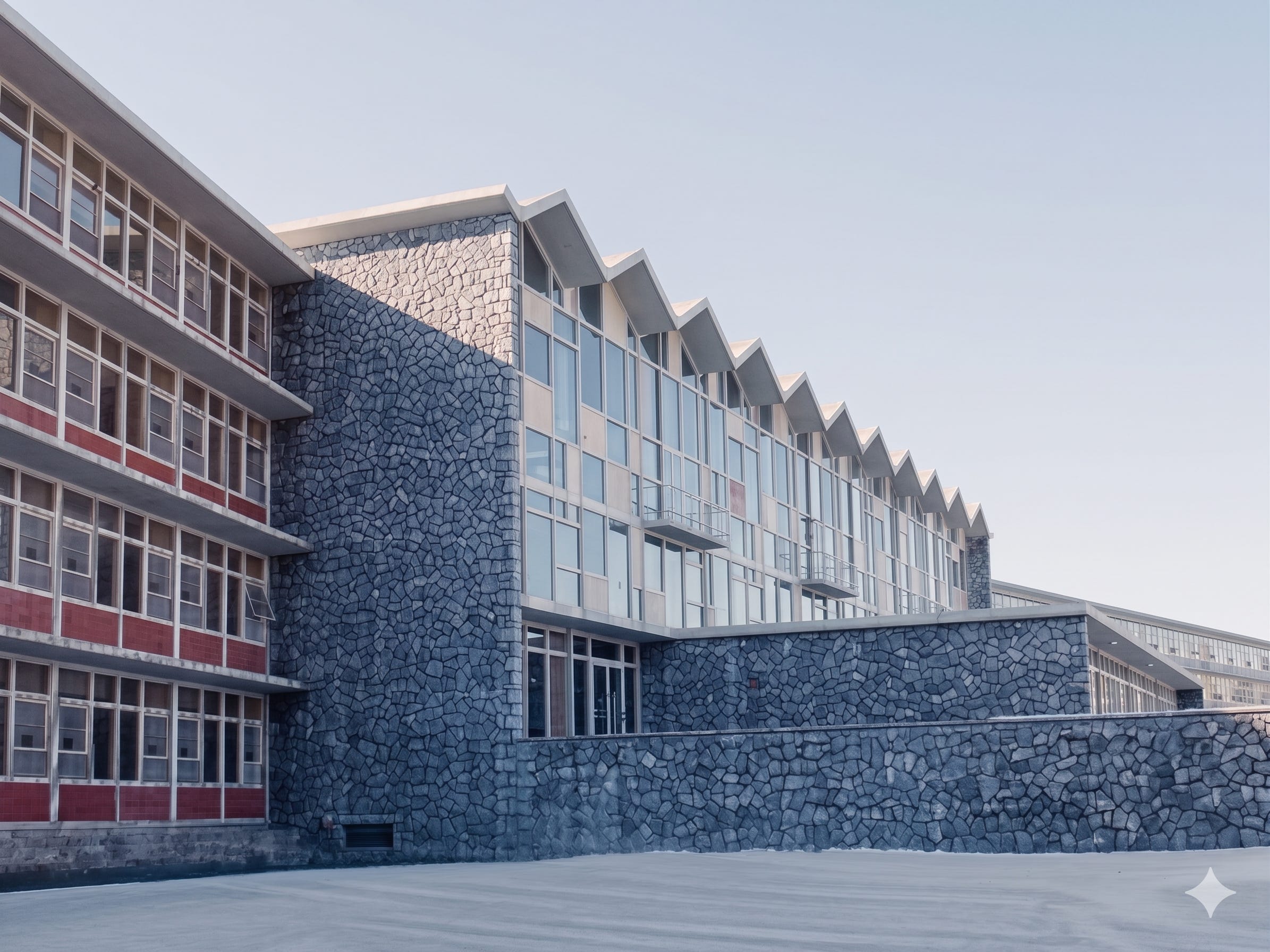
Photo: Early 1960s, Kabul University Dormitory, constructed through United States financial and technical assistance. The dormitory played a significant role in accommodating generations of Afghan scholars and students, including the author, and became an important symbol of Afghanistan’s modern higher education development. The dormitory was reconstruted again by the USAID in 2013.
Introduction
The popular story of U.S.–Afghan relations starts on September 11, 2001 and ends on August 15, 2021—twenty years of the war on terror, with little before or after thought worth noticing. This framing dominates public commentary and much of how the Afghan diaspora has narrated itself since 2021. It is also wrong. The educational and intellectual ties between the United States and Afghanistan are older, deeper, and more important to Afghan development than that story allows[1].
Drawing on primary sources—a 1972 USAID audit of Afghan education and mid-1970s USAID feasibility reports on rural education (Bing & Srinivasan, 1975)—this essay makes three arguments.
First, the relationship is long. Continuous American educational engagement with Afghanistan began in 1954. By the time the Saur Revolution of 1978 cut it off, the United States had invested twenty-four uninterrupted years and roughly thirty-seven million dollars in Afghan education (USAID, 1972). The post-2001 period was not a beginning or a fresh start; it was a return after twenty-five years of forced absence.
Second, the relationship served Afghan goals that predated American involvement by half a century. Since Mahmud Tarzi’s newspaper Siraj al-Akhbar (1911–1919), Afghan reformers had treated modern education as essential to national survival. Each phase of Afghan modernization—Tarzi’s generation, the Amanullah-era European partnerships of the 1920s, the Musahiban consolidation of the 1930s and 1940s, the Daoud-Zahir constitutional opening of the 1950s and 1960s—built on the one before. When American institutions arrived—Columbia’s Teachers College, Southern Illinois University, Indiana University, the Universities of Wyoming and Nebraska, the Peace Corps, the Fulbright Commission—they worked inside structures Afghans had built and still controlled (USAID, 1972).
Third, this history is a legacy that today’s Afghan intellectuals and the diaspora should claim as their own. The point is not to celebrate American influence but to recover the Afghan reform tradition that absorbed it—one strand among Turkish, French, German, Soviet, and indigenous Afghan threads.
The essay has eight sections. Section I lays out the method. Sections II–V trace Afghan modernization from the late nineteenth century to the early 1950s. Section VI reconstructs the American period (1954–1978) from primary sources. Section VII covers the rupture of 1978–2001. Section VIII examines the second period of engagement (2002–2021). The conclusion argues for the intellectual genealogy this longer history demands.
A Continuous Reform Tradition: Phases, Not Ruptures
The standard periodization of Afghan modern history offers the convenience of clean episodes: Abdur Rahman closes (1880–1901), Habibullah opens (1901–1919), Amanullah accelerates (1919–1929), the civil war reverses (1929), the Musahiban retrench (1929–), Zahir liberalizes (1933–1973), the United States arrives (1950s), the Saur Revolution disrupts (1978). Each label captures something true. Together, however, they obscure the deeper continuity that runs through these phases. Each successive period built on, negotiated with, and partially concealed itself within the institutional architectures inherited from its predecessors. None of the openings was a clean break; none of the retrenchments was a clean reversal. Royal patronage, court-centered reformism, suspicion of regional powers, preference for distant non-bordering partners, an elite stratum cultivated in the capital and a few provincial centers, and a cautious distance from the deep countryside—these features ran continuously through the entire arc, even as the foreign partnerships and the dominant rhetoric shifted from Turkish to European to American.
Reading the U.S.–Afghan partnership through this layered frame has analytical consequences. It means treating the American engagement of the 1950s through 1970s not as an external Cold War initiative imposed on a passive Afghan state, but as a deliberate Afghan choice to add an American layer to a modernization project Afghans had been directing for nearly half a century. It means recognizing that the structural narrowness Rakove (2023) identifies in the Cold War partnership—its filtering through Kabul’s Westernized elite—was not introduced by the Americans but inherited from the Habibullah-Tarzi pattern that had set the terms of Afghan reformism three generations earlier. And it means that the post-2001 second batch must be analyzed not only against the rupture of 1978–2001 but against the much longer continuity that the rupture interrupted.
This methodological framing also has implications for the diaspora’s intellectual self-understanding. If U.S.–Afghan intellectual relations are a layer rather than an episode, they cannot be separated from the rest of the Afghan reform tradition without distorting both. To analyze the American engagement honestly is to analyze it alongside the Tarzi generation, the Amanullah cohort sent to Europe, the Musahiban’s French and German partnerships, and the Soviet engagement at the Polytechnic Institute as expressions of the same continuous Afghan project under different external partnerships. The diaspora’s task, when it engages with the American chapter, is not to celebrate or condemn it in isolation but to integrate it into the longer continuum it both joined and helped extend.
The Abdur Rahman Foundation (1880–1901)
The unitary kingdom forged by Amir Abdur Rahman Khan consolidated central authority but did so at substantial cost to social, economic, and intellectual development (Ewans, 2002). To preserve absolute power, Abdur Rahman pursued a deliberate policy of self-imposed isolation, exiled forward-thinking subjects, and suppressed any inquiry that might unsettle the established order (Gregorian, 1969; Poullada, 1973). Throughout the late nineteenth century, formal learning was confined almost entirely to mosques and madrasas, where conservative mullahs imparted a curriculum dominated by rote memorization and strict adherence to medieval scholasticism (Gregorian, 1969). Modern sciences, foreign languages, and humanist inquiry were absent (Lee, 2018). The few Afghans who sought a non-traditional education had to leave the country—for India, Bukhara, or the Ottoman Empire—an act that effectively amounted to self-imposed exile (Ewans, 2002).
It is essential, however, not to read this period as merely a long sleep. Abdur Rahman built the institutional machinery—a centralized administration, a tribute-paying clergy, a controlled foreign policy, a managed elite—that subsequent reformers would inherit and operate within. He also institutionalized two strategic preferences that would persist throughout the Afghan modernization project: the avoidance of dependence on neighboring British India and Tsarist Russia, and the preference for engagement with distant, non-bordering partners. These preferences would shape every subsequent phase of Afghan foreign-policy and educational decision-making, including the eventual turn to the United States half a century later. Read against the longer arc, Abdur Rahman’s reign is not the antithesis of Afghan modernization but its institutional precondition: it built the centralized state that subsequent reformers needed in order to pursue any modernization at all, and it set the strategic calculus within which their foreign-partnership choices would be made.
The Habibullah Period (1901–1919): Liberalization Within the Inherited Framework
The accession of Amir Habibullah Khan inaugurated a period of relative openness in Afghan intellectual life. It would be a mistake, however, to read this period as a break from his father’s political settlement. Habibullah retained the absolute monarchy, the centralized administration, the careful management of the ulama, and the cautious foreign policy that Abdur Rahman had established. What changed was the space he permitted within these structures. A general amnesty allowed exiled intellectuals to return, bringing with them the cosmopolitan exposure of their years abroad (Koplik, 2015). The founding of Habibia College in 1903/1904 introduced modern secondary education to a small cohort drawn primarily from the royal family, court officials, and the sons of prominent religious and tribal leaders (Newell, 1972; Amin, 1978). The 1972 USAID audit, looking back from a half-century’s distance, identifies Habibia as the institutional starting point of “the modern education era in Afghanistan,” and adds that the first regular primary school was established in Kabul in 1909 and the first teacher-training institution—the Darul Mo’Allamein—in 1912 with an inaugural cohort of 120 trainees (USAID, 1972).
The reformist energy of the period, however, came less from Habibullah personally than from the circle that he tolerated. The so-called Young Afghans (Jawanan-i Afghan) gathered around Mahmud Tarzi, who had absorbed during his Damascus and Istanbul exile the reformist currents of the Young Turks and the pan-Islamic anti-colonialism of Jamal al-Din al-Afghani (Lee, 2018). It was Tarzi’s circle, not the monarch himself, that systematically dismantled the anti-modernist rhetoric of the previous decades, arguing through the biweekly Siraj al-Akhbar (1911–1919) that Islam and modern science were not merely compatible but mutually reinforcing, and that national survival in an age of empire depended on embracing both (Ahmed, 2017; Gregorian, 1969). Habibullah’s role was that of a permissive monarch operating within a system that remained, in its essential structure, his father’s. He was assassinated in 1919, in part because conservative court factions considered him insufficiently pious (Lee, 2018)—a fact that should warn against any reading of this period as a clean break from the conservative settlement of the 1880s and 1890s. The liberalization Habibullah permitted was real but partial, and it operated under continuous pressure from a conservative establishment that had been built up under Abdur Rahman and remained largely intact.
This continuity matters for the longer argument. The reformist tradition that would later receive American partnerships in the 1950s was not founded by a sudden break in the early twentieth century. It emerged within the inherited Abdur Rahman state through the patient cultivation of a small intellectual space, and it carried the imprint of that inheritance—its elite-court orientation, its caution toward the deep countryside, its dependence on royal tolerance, its restriction to a privileged few—into all the phases that followed. Modern education under Abdur Rahman and Habibullah alike was deliberately restricted to a privileged stratum: members of the royal family, select state officials, and the sons of prominent religious and tribal leaders, drawn mainly from the second and third tiers of the court (Gregorian, 1969). The intent was utilitarian: to produce administrators and bureaucrats rather than to foster independent thought. This pattern—reform through a narrow court-centered elite, with the deep countryside left largely untouched—would persist as a structural feature of the Afghan modernization project across every subsequent phase, including the American one.
The Amanullah Acceleration and the Turkish Sphere (1919–1929)
Amanullah Khan, Habibullah’s son and Tarzi’s son-in-law, inherited not only the throne but also the Tarzi reformist network. His reforms—the 1923 constitution, the legal modernization, the educational expansion, the dispatch of students to France, Germany, Italy, and Turkey—represented an acceleration within the framework Habibullah had cultivated rather than a break from a stagnant past (Poullada, 1973). The continuity is visible in the personnel as much as in the institutions: the first cohort of students sent abroad to France included future prominent leaders such as Prince Daoud Khan, who would in time return to direct the Afghan state and preside over the constitutional decade of the 1960s (Poullada, 1973). The cumulative effect of Amanullah’s educational policy was the formation of a small but consequential European-trained Afghan elite whose influence would extend into the Musahiban period and beyond, providing personnel continuity across what is conventionally treated as a sharp break.
The Amanullah period also marked the maturation of the Turkish sphere of foreign influence in Afghan modernization—a sphere whose foundations had been laid in the Habibullah era through Tarzi’s personal Ottoman exposure and the intellectual currents of Siraj al-Akhbar. The 1921 Turco-Afghan Alliance Agreement, signed by representatives of Mustafa Kemal and Amanullah, committed Turkey to dispatch military officers and educators to Afghanistan; the arriving Ottoman experts established the Mekteb-i Harbiye (military academy) and taught in civilian schools, solidifying Turkish pedagogical and administrative influence (Ahmed, 2017). For Afghan modernists, the Ottoman Empire—and its Kemalist successor—represented an attractive synthesis: a Muslim-majority polity that had assimilated Western sciences and military technology while preserving Islamic sovereignty (Gregorian, 1969).
The 1929 civil war and the brief, reactionary rule of Habibullah Kalakani interrupted Amanullah’s acceleration but did not erase its institutional foundations. Many of the European-trained Afghans returned to public life under the Musahiban dynasty after 1929, providing the personnel and intellectual continuity that allowed the modernization project to resume its layered development under more cautious management (Lee, 2018). The 1929 episode is therefore better understood as a constraint on the pace of reform than as a reversal of its direction—a moment that pushed the modernization project toward greater accommodation with conservative elements while preserving its core institutional commitments.
The Musahiban Consolidation and the European Sphere (1929–1953)
The Musahiban dynasty under Nadir Shah (1929–1933) and Mohammad Zahir Shah (1933–1973) is often presented as a long retreat from Amanullah’s modernization. The historical record is more ambiguous. The Musahiban did make substantial ideological concessions to the conservative clergy in the immediate aftermath of the 1929 rebellion (Gregorian, 1969; Newell, 1972), and the visible pace of public reform slowed compared to the Amanullah years. But cautious institutional development continued, and several of the most consequential institutions of modern Afghan higher education were established during this period of supposed retrenchment. Kabul University was founded in 1932 with the establishment of the Faculty of Medicine, supported by a French medical mission and Turkish professors (Gregorian, 1969). The College of Law and Political Science followed in 1938, and the Faculty of Science in 1942, both drawing on French and German methods and personnel (Amin, 1978; Newell, 1972). Read in continuity with what came before, the Musahiban period extended rather than reversed the modernization project; what changed was the rhetorical register, not the institutional direction.
The European sphere of foreign influence—chiefly French and German—matured during this period. French instructors had been recruited for the Amaniyya (later Istiqlal) lycée in the 1920s, and German educators for the Amani (later Nejat) school (Fletcher, 1965; Poullada, 1973), and these partnerships extended into the Musahiban period as the institutional foundation of Afghan higher education. The European turn reflected the same Afghan strategic logic that had shaped the earlier Turkish partnership: a deliberate diversification across distant non-bordering powers in order to insulate the modernization project from any single foreign veto and to avoid dependence on either British India or Soviet Russia (Newell, 1972). The 1972 USAID audit confirms the durability of these European partnerships across four decades: by the early 1970s, France was still supporting the Faculties of Medicine, Law, and Letters at Kabul University, and the Federal Republic of Germany was assisting the Faculties of Science and Economics, with German support to the technical-education sector then being gradually transitioned to Afghan management (USAID, 1972).
By the early 1950s, when the question of American partnership arose, the Afghan modernization project was therefore well advanced. It had a generation of European-trained leaders (Daoud Khan among them) who would soon assume the senior positions of the Afghan state. It had an established university system with multiple faculties supported by long-running partnerships with several foreign powers. It had a consolidated developmental state under the Musahiban that had survived the 1929 disruption with its institutional core intact. And it had a clearly articulated strategic preference—traceable to Nadir Shah’s declarations of the 1930s but rooted ultimately in Abdur Rahman’s original strategic logic—for engagement with countries that lacked colonial aspirations in the region (Gregorian, 1969). What it sought from the United States was not a foundation but the next layer.
The American Layer (1954–1978): Continuity and Acceleration
A. Strategic Logic and Afghan Direction
By the time the United States arrived in significant numbers as an educational partner in the early 1950s, the Afghan modernization project was nearly half a century old. It had been launched under Habibullah within Abdur Rahman’s institutional framework; matured under Amanullah with European partnerships and a Turkish military-educational alliance; consolidated under the Musahiban with Kabul University, French and German faculty support, and a generation of European-trained leaders. The American partnership, when it came, was absorbed into this continuing project. It was the next phase, not the founding one.
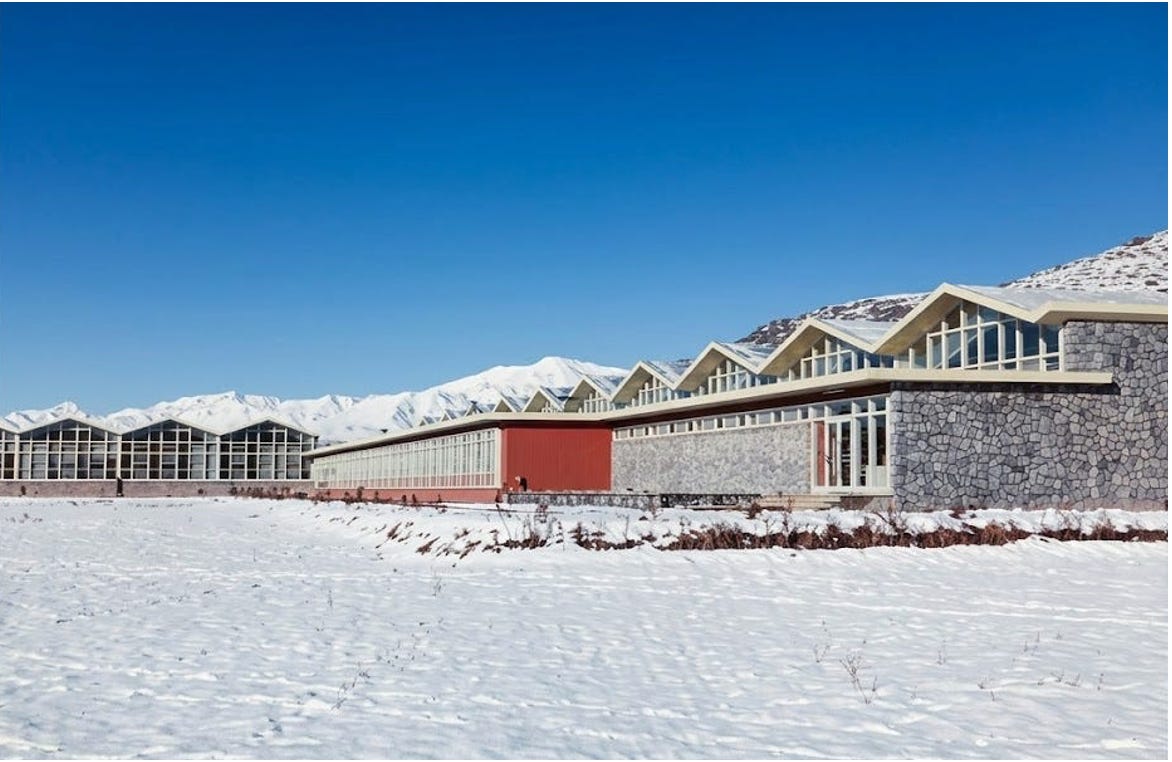
Photo: The Kabul University library, built in the 1960s with financial and technical support from the United States.
This framing matters for how the archival evidence should be read. The detailed American institutional architecture documented in the 1972 USAID audit—Teachers College of Columbia University at the Faculty of Education, Southern Illinois University at the Afghan Institute of Technology, Indiana University at Kabul University central administration, and so on—was not imposed on Afghanistan. Each of these contracts ran through Afghan ministries, operated under Afghan policy direction, and required Afghan counterparts at every level. The Afghan side was contributing approximately twelve percent of the general government budget to education in the late 1960s, with annual Ministry of Education expenditures rising from 339 million afghanis in 1964 to 732 million in 1970—a 9.6 percent annual growth rate against a 4.6 percent average across all ministries (USAID, 1972; Bing & Srinivasan, 1975). The American partnership was substantial but it operated as one of several streams of foreign assistance feeding an Afghan-directed project that also included Soviet (Polytechnic Institute), West German (Faculties of Science and Economics), French (Faculties of Medicine, Law, and Letters), and Indian, Egyptian, Bulgarian, Chinese, Czechoslovak, and Polish bilateral programs (USAID, 1972).
What the American partnership particularly did was extend the reformist tradition into specific sectors that Afghan policy makers had identified as priorities: teacher training (TCCU), vocational and technical education (SIU/Wyoming/AIT), university administration (Indiana), and rural non-formal education (Nebraska/Academy for Educational Development). The strategic choice—to receive American assistance in these specific areas—was an Afghan one, made within a long-standing preference for engagement with what Nadir Shah had described in the 1930s as countries lacking colonial aspirations in the region (Gregorian, 1969). The United States, like Turkey before it and France and Germany alongside it, was a non-bordering power whose geopolitical position made the partnership safe from the Afghan point of view, and whose post-1945 ascendancy made it newly available as a partner.
B. Institutional Architecture: A Network of Sustained University Contracts
The 1972 USAID audit report provides the most comprehensive contemporary record of the scale of this engagement. By September 30, 1972, USAID had obligated approximately thirty-seven million U.S. dollars for the Afghan education sector since the program’s inception in 1954—eighteen years of continuous funding through a network of long-term contracts with American universities, each assigned to a specific institutional reform task (USAID, 1972).
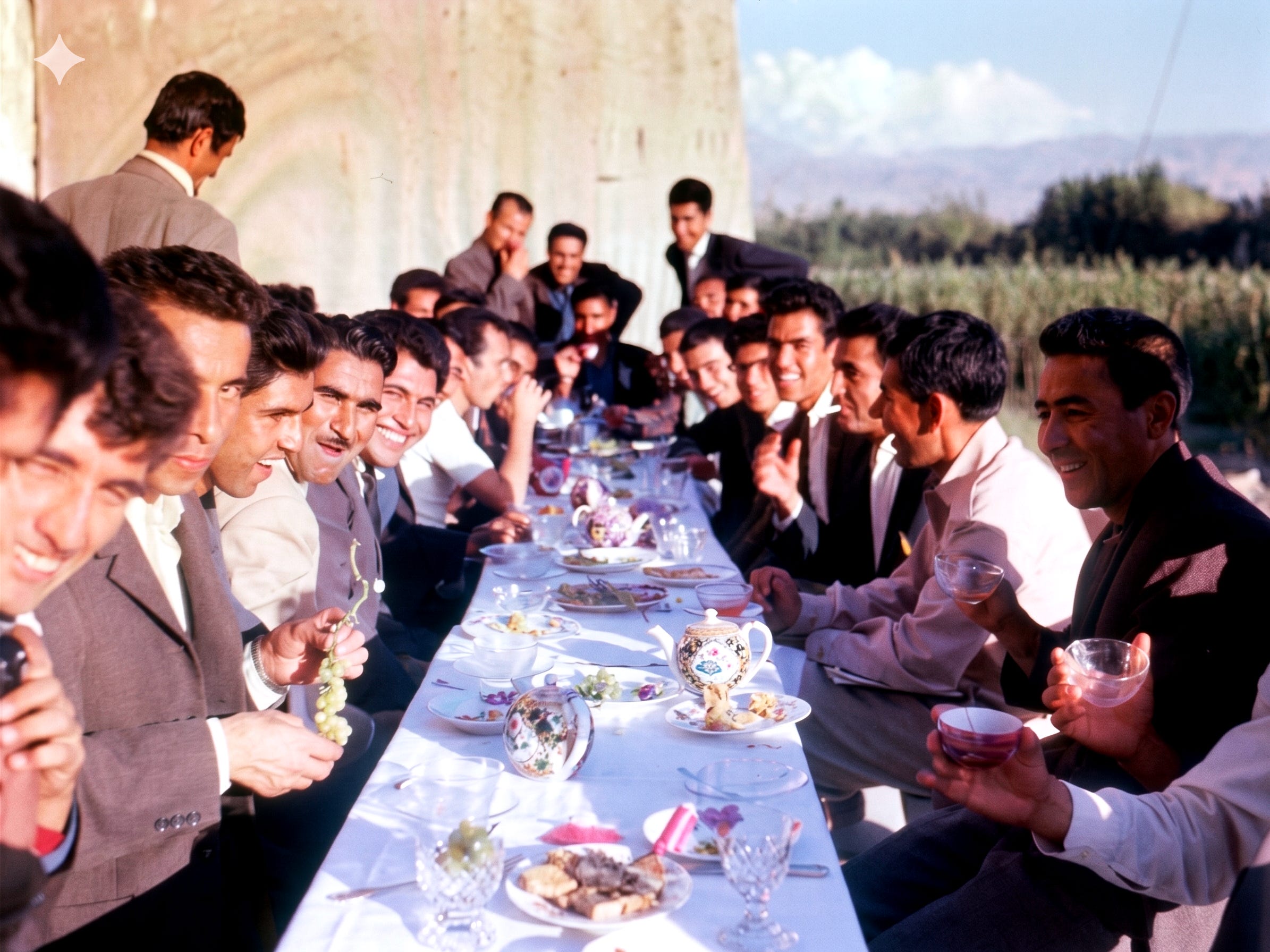
Photo: Late 1950s, a group of agriculture faculty students from Kabul University enjoying a picnic in Paghman, organized with support from the United States Agency for International Development. This image highlights the growth of academic and student life initiatives linked to international educational assistance during Afghanistan’s modernization in the mid-twentieth century.
Teachers College of Columbia University (TCCU) was the first and longest-serving American partner. From 1954 onward, TCCU operated under continuous USAID contracts that placed American educators inside the Afghan Ministry of Education and within Kabul University’s Faculty of Education (USAID, 1972). The TCCU portfolio was unusually wide-ranging and covered four continuously running sub-programs over the better part of two decades. A Primary Teacher Education program ran from 1954 to 1967, when UNESCO assumed the lead role. An Emergency Teacher Education program operating from 1962 to 1968 added approximately eight hundred primary teachers to the Afghan system, over and above the regular output of Afghan teacher-training schools. A Secondary Teacher Training program operated continuously from 1956 to 1971, working through the Faculty of Education at Kabul University to produce secondary-level teachers for the rapidly expanding lycée system. And an English Language program, which ran from 1956 to 1968, was assessed by USAID itself as the most popular education program in the country (USAID, 1972). After the 1968 phase-out of the standalone English-language program, U.S. Peace Corps volunteers continued to staff English instruction in Afghan schools (USAID, 1972).
Southern Illinois University (SIU) led a parallel reform of Afghan vocational and technical education through the Afghan Institute of Technology (AIT) in Kabul. After an initial USAID advisory engagement at AIT from 1956 to 1962, SIU was contracted in October 1964 (Contract AID/nesa-131, later AID/nesa-244) to provide a comprehensive transformation of the Institute. By the contract’s conclusion on June 30, 1970, the curriculum had been completely re-written across six new technical majors (aviation, automotive, building construction, civil, electrical-electronics, and machine-shop and machine-tool operations); a new physical plant of nearly thirteen thousand five hundred square meters—twelve buildings including dormitories for four hundred boarding students—had been completed and dedicated on June 27, 1968; approximately six hundred thousand U.S. dollars in laboratory equipment had been installed; and AIT enrollment had increased by 58 percent to about six hundred students, graduating roughly 180 trained middle-level technicians annually. The total construction package amounted to roughly four million U.S. dollars, of which USAID contributed 1.6 million and the Afghan government contributed 77,059,000 afghanis (USAID, 1972).
After SIU’s departure in 1970, the University of Wyoming was contracted to provide residual advisory services to AIT, inaugurating Wyoming’s continued involvement in Afghan vocational and agricultural education. Dr. Keith Humble of Wyoming arrived at AIT on September 27, 1970, and was succeeded in June 1971 by John E. Griswold, who served as Chief of Party until the contract’s completion in June 1972 (USAID, 1972). The University of Nebraska entered Afghanistan principally on the rural and basic-education side; by the mid-1970s, Nebraska faculty were among the technical advisors involved in feasibility work for non-formal education in rural areas, building on the institutional infrastructure established under the SIU/Wyoming AIT contracts.
Indiana University handled the parallel reform of Kabul University’s central administration. Under Project Agreement 306-013, signed in April 1966, USAID obligated 1.7 million dollars through September 1972 for an Indiana University contract (AID/nesa-282) that placed four long-term technicians and six short-term consultants at Kabul University. The Indiana team rewrote student admission and registration procedures, established a central student-records system, introduced University planning seminars, and developed orientation programs for incoming students. Forty-one Afghan administrators received training across various phases of university administration; nine had returned to Kabul by 1972 with Master’s degrees from American universities, and seven were still in the United States completing graduate work in Business Administration at the time of the audit (USAID, 1972). The audit candidly acknowledged that progress on implementing university-wide administrative reforms had been slower than hoped, attributing the difficulty to structural features of Kabul University—notably, the autonomy of the various Faculties and the election (rather than appointment) of Faculty Deans—that limited the central administration’s capacity to enforce policy uniformly (USAID, 1972). The intellectual lesson of the audit was significant: even substantial American technical assistance could not overcome the underlying political economy of Afghan academic governance, and the reform of higher education depended on Afghan internal consensus that no external program could supply.
In addition to Columbia, SIU, Wyoming, Nebraska, and Indiana, Franklin Book Programs—a U.S. non-profit organization—operated the Afghan Ministry of Education’s Education Press to produce textbooks and instructional materials throughout this period (USAID, 1972). The Peace Corps had operated in Afghanistan since 1962, supplying volunteer English, mathematics, and science teachers across the country (USAID, 1972). The Fulbright Commission sustained the academic exchange that brought Afghan students to American universities and American scholars to Afghanistan, and was, in Kornacka’s (2014) judgment, the most recognizable and successful of the U.S.-sponsored exchange programs. The Asia Foundation funded targeted educational and cultural projects (USAID, 1972). The architectural firm Daniel, Mann, Johnson, and Mendenhall designed and engineered the AIT physical plant under a separate U.S. government grant of approximately three hundred eighty thousand dollars (USAID, 1972). Together, this network represents a substantially larger and more sustained intellectual partnership than the standard literature on U.S.–Afghan relations typically acknowledges.
C. Sectoral Reach: From the Village to the University
The institutional architecture above might suggest that U.S. assistance focused primarily on Kabul University and other elite institutions. The archival record shows otherwise. The engagement extended downward through the Afghan educational system and outward into rural areas in a way that has rarely been recognized.
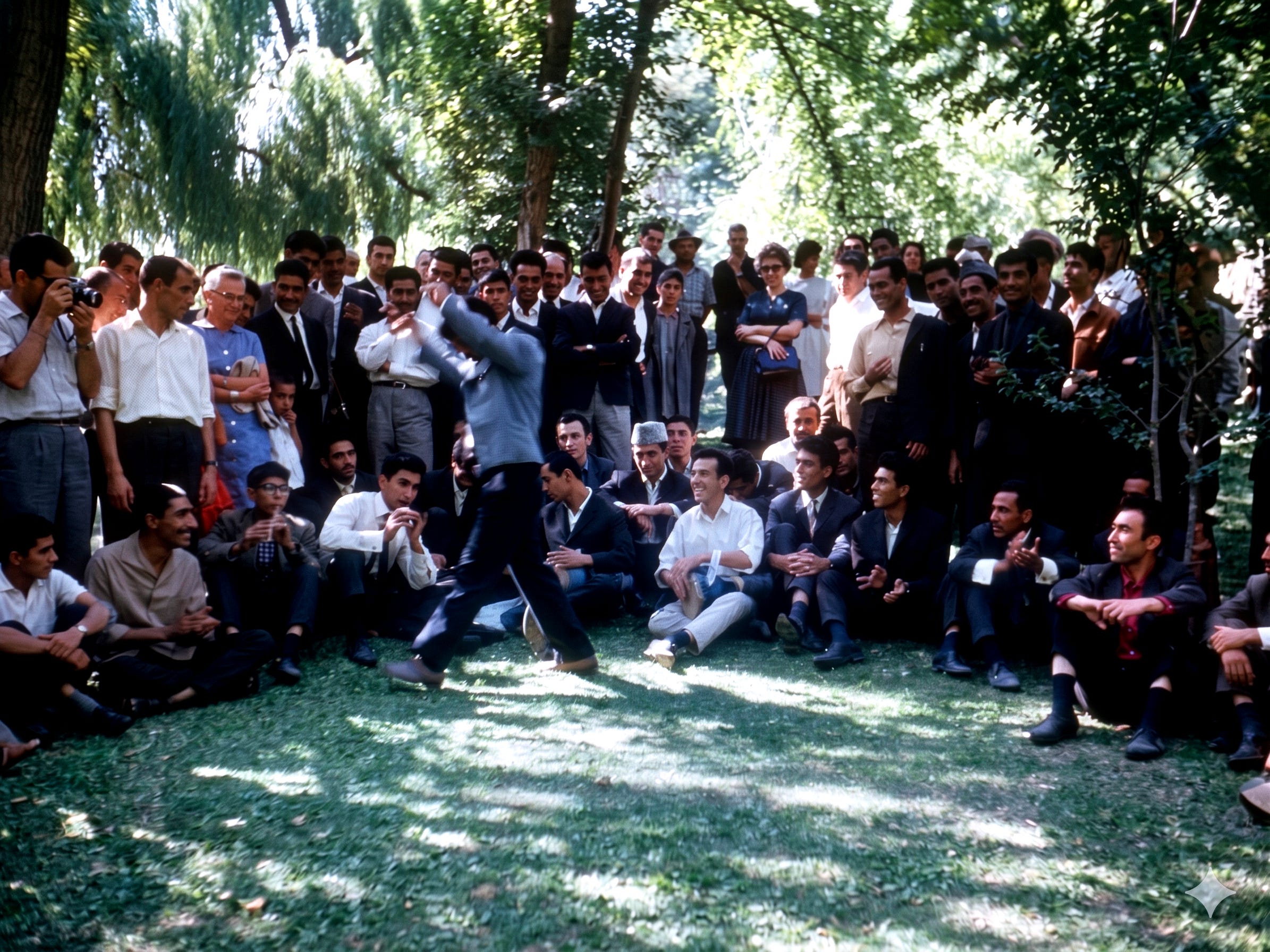
Photo: Mid-1960s, students celebrating the successful completion of an academic project supported by the United States Agency for International Development. The image reflects the evolving culture of institutional development, student engagement, and international educational collaboration during a pivotal time in Afghanistan’s higher education growth.
At the primary level, the TCCU emergency teacher-training program (1962–1968) added eight hundred trained primary teachers to the Afghan system at a moment when the country was attempting to expand basic education to rural areas (USAID, 1972). USAID-financed curriculum and textbook development for primary education continued under TCCU through the early 1970s, with project funding of approximately six hundred thousand dollars per year and revisions ongoing on roughly 140 textbook titles by 1972 (USAID, 1972). At the village school level—where instruction in 1970 covered the first three grades and reached a network of 1,852 village schools serving an average of 200 pupils each—American assistance contributed indirectly to curriculum design and teacher preparation (USAID, 1972). At the secondary level, the rapid expansion of middle and high schools (lycées) was supported by TCCU’s continuous secondary teacher training program. Between 1965 and 1971, total enrollment at Afghan secondary schools grew by approximately 82 percent, reaching about 82,000 students in middle schools and 26,000 in high schools by 1970 (USAID, 1972). At the higher-education level, by 1971 Kabul University had grown to 5,719 students from a 1965 base of 3,136—a six-year increase of roughly 82 percent—with nine faculties, of which all but Theology had received some form of American technical assistance (USAID, 1972).
By the mid-1970s, U.S. engagement was pushing further still—into rural non-formal education designed to reach those whom the formal school system had not. The 1975 feasibility report by John W. Bing and Lyra Srinivasan, prepared for USAID under contract with the Academy for Educational Development, surveyed three districts of Kabul Province (Deh Sabz, Chardehi, and Bagrami) to determine the viability of a village-level non-formal education project (Bing & Srinivasan, 1975). The team worked closely with the Afghan Directorate of Functional Literacy and Adult Education (FLAE), met directly with the Minister of Education Dr. Kayum and the First Deputy Minister Dr. Siddiq, and consulted extensively with Ms. Kubra, the President of the Directorate, who by the team’s account was actively cooperative in setting up site visits and willing to consider an unconventional, contract-based approach to village field operations (Bing & Srinivasan, 1975). Two members of the consulting team had spent a combined seven years in Afghanistan during 1964–1973, indicating that by the mid-1970s a stratum of American specialists had accumulated sustained, longitudinal field experience in the country (Bing & Srinivasan, 1975).
A subsequent draft project outline by Bing, Srinivasan, and Villaume (1975), prepared in consultation with five named Afghan colleagues—A. Fareghi, A. Qayeum, G. Shewa, Aziza Azia, and N. Rahimi—proposed a three-year, four-phase pilot program designed to develop rural youth and adults’ economic productivity through training in agriculture, animal husbandry, small-scale industry, and home crafts. The proposal explicitly recommended that core staff positions be filled, to the maximum extent possible, by qualified Afghans selected on the basis of professional qualifications, with non-professional staff to be entirely Afghan nationals (Bing, Srinivasan, & Villaume, 1975). It also called for equal attention to male and female learners, with two male and two female Field Operational Agents in each pilot village, and for six Afghan FLAE educators (including a woman) to undertake a six-week field-visit orientation in the United States, with stops at the Center for International Studies at the University of Massachusetts at Amherst, World Education in New York, and Michigan State University, and a possible field visit to an ongoing non-formal education project in Turkey, Iran, or the Philippines (Bing, Srinivasan, & Villaume, 1975). That such a project was being designed at all in 1975, with explicit attention to Afghan ownership of staffing and to the educational needs of Afghan women, testifies to the breadth and ambition of the partnership in the immediate pre-war period.
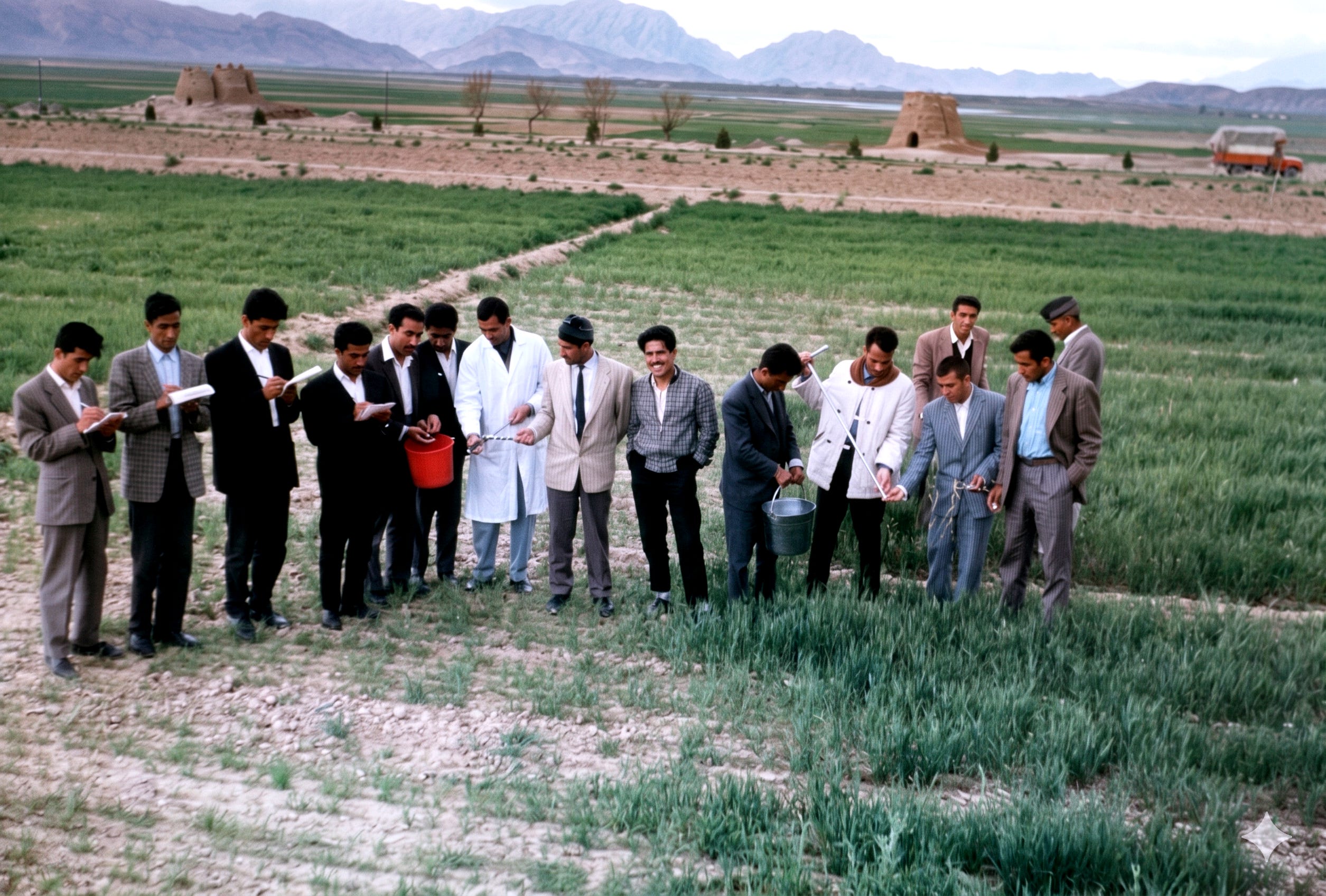
Photo: Early 1960s, a group of agriculture faculty students from Kabul University engaged in a field visit and hands-on skills development activity. This image highlights the focus on applied agricultural education, technical training, and experiential learning during the growth of Afghanistan’s modern higher education system.
D. Human Capital Formation
The most lasting product of the American layer was human capital. By 1962 alone, more than one thousand Afghans had received an American education (Fletcher, 1965). Within individual programs, the documented numbers add up rapidly. The Indiana University Kabul Administration project trained 41 Afghan administrators, with 9 returning by 1972 with American Master’s degrees and 7 still in the United States completing graduate work (USAID, 1972). The SIU vocational education program at AIT trained 55 Afghan vocational educators, of whom 23 had received some form of U.S. training, including 4 with American Master’s degrees, 4 with Bachelor of Science degrees, and 9 with Associate Technical degrees; on the participants’ return, the SIU team was replaced by Afghan vocational teachers and the technical-assistance program terminated successfully on schedule, on June 30, 1970 (USAID, 1972). The TCCU program over its eighteen years involved fourteen American specialists and thirty-eight Afghans from the Ministry of Education at the time of the 1972 audit, with cumulative trainee numbers across primary, secondary, and university teacher-training programs running into the high hundreds (USAID, 1972). The cumulative effect on Kabul University faculty was substantial: prior to the war, more than one-third of Kabul University faculty held Ph.D.s (Babury & Hayward, 2014), a level of qualification that placed the institution among the more credentialed universities in the developing world at the time.
E. Multi-Channel Continuity
A defining feature of the American layer is its multi-channel continuity. American engagement was not concentrated in a single program that could be terminated by the failure of one contract; it was distributed across USAID, the Peace Corps, the Fulbright Commission, the Asia Foundation, and direct university-to-university partnerships. When one program ended—such as the SIU contract for AIT in 1970—another took its place: the University of Wyoming residual advisory program. When TCCU’s primary-teacher-training role was phased out in 1967, UNESCO assumed it, while TCCU continued in the secondary, English-language, and curriculum sub-projects through 1971. The architecture was robust, layered, and self-renewing—a feature that mirrored the longer Afghan strategy of distributing foreign-partnership influence across multiple sources to insulate the modernization project from any single failure point.
The Disruption (1978–2001) and the Question of Brittleness
The trajectory of the American layer was abruptly broken by the Saur Revolution of April 1978, which brought the People’s Democratic Party of Afghanistan to power and inaugurated a quarter-century during which sustained American intellectual engagement was no longer possible. The Soviet invasion of December 1979 deepened the rupture: the Fulbright Program, which had operated continuously since 1952, was suspended that year and would remain absent for nearly a quarter of a century (Kornacka, 2014). The TCCU, SIU, Wyoming, Indiana, and Nebraska contracts had all wound down by then, but the wider American educational presence—the Peace Corps, the Asia Foundation, the USAID education-sector technical assistance—was forced to withdraw, and the institutional architecture documented above ceased to function as a transmission belt for U.S.–Afghan intellectual exchange.
Beyond the bilateral relationship, the period transformed the Afghan intellectual climate itself. The continuous developmental ethos of the earlier decades was displaced by ideological indoctrination from both right and left, and the core mission of intellectualism was subordinated to political agendas defined by the Cold War, the Soviet occupation, the mujahideen resistance, the civil wars of the 1990s, and the Taliban regime (1996–2001). The human cost was severe and measurable. By 2008, only 5.2 percent of Kabul University’s faculty held Ph.D.s and 31 percent held Master’s degrees (Babury & Hayward, 2014)—figures dramatically lower than the more-than-one-third Ph.D. share that had prevailed in the 1960s and 1970s. The institutional capacity that the longer reform tradition had built up across nearly seventy-five years had been depleted.
The collapse of 1978 raises a question that the long arc framing makes unavoidable. If the modernization project was nearly seventy-five years old at the time of the Saur Revolution, why did it prove so vulnerable? The answer lies partly in the structural narrowness identified by Rakove (2023)—but that narrowness, properly understood, is not a feature of the American partnership alone. It is inherited from the original Habibullah-Tarzi pattern of court-centered modernization, conducted from above by a small reformist elite, depending on royal tolerance, and oriented toward urban centers rather than the deep countryside. Each successive phase—Amanullah’s European-trained cohort, the Musahiban’s French- and German-supported faculties, the Daoud-Zahir constitutional opening, the American layer—extended the elite stratum without fundamentally altering its narrowness. The 1975 Bing-Srinivasan feasibility report acknowledged this directly: rural Afghan villages had remained “fundamentally unchanged, socially and economically, largely because of isolation and the economics of subsistence” despite two decades of intensive American partnership and a longer history of Afghan modernization (Bing & Srinivasan, 1975).
The structural narrowness was therefore not a flaw of the American partnership; it was a feature of the Afghan reform tradition into which the American partnership had been absorbed. Recognizing this is essential to the diaspora’s intellectual self-understanding. The task is not to defend the Tarzi-to-Daoud-to-American continuum from the 1978 disruption by treating the disruption as an external imposition, but to ask honestly whether the continuum’s elite-court character contained, from its early-twentieth-century origins, the seeds of its own vulnerability. A modernization project conducted by a small Westernized stratum in Kabul and a few provincial capitals—generative as it was of human capital, institutional infrastructure, and intellectual achievement—did not build the rural and provincial constituencies that might have defended it when the Saur Revolution came. This is not to absolve the political actors of 1978 of responsibility for what they did. It is to recognize that the brittleness against which their actions registered was a feature of the longer arc, not an importation from outside it.
The Second American Layer (2002–2021): Reconstruction Within Continuity
The arrival of the Republic in late 2001 and the establishment of a new Afghan government in 2002 reopened the space for U.S.–Afghan intellectual collaboration. In 2003, the U.S. Department of State formally reinstated the Fulbright Program in Afghanistan, an explicit attempt to rebuild academic ties with a country whose universities had been hollowed out by decades of war (Kornacka, 2014). Across the following two decades, the United States delivered scholarships to Afghans across a wide range of fields, and bilateral educational engagement once again became one of the most consistent features of the relationship—even as the broader political and military situation grew more contested. The post-2001 era is therefore better understood not as a fresh start but as a delayed continuation: the second flowering of an engagement that had been interrupted in 1978 but that drew on institutional models, personnel networks, and strategic logics established in the earlier American layer and, behind it, in the longer Afghan reform tradition.
Several features distinguished the second batch from its predecessor. The first was the comparative breadth of participation. Whereas the first batch had been heavily concentrated among male elites drawn from a narrow Kabul-based stratum, the second batch made deliberate efforts to broaden access along gender and provincial lines. By 2013, twenty percent of Afghan Fulbright candidates were women (Babury & Hayward, 2014), a marked departure from the patterns of the 1960s and 1970s—though one that built, intellectually, on the explicit female-participation provisions of the 1975 Bing-Srinivasan-Villaume non-formal-education project design (Bing, Srinivasan, & Villaume, 1975). The second feature was the explicitly reconstructive character of the engagement: whereas the first batch had built capacity into a small but functioning higher-education system, the second batch sought to rebuild a system whose foundations had been catastrophically eroded. The 2008 figure of 5.2 percent of Kabul University faculty holding Ph.D.s (Babury & Hayward, 2014) conveys the depth of the deficit.
The third feature, and perhaps the most analytically important, was a structural continuity that the new context did not fully overcome. The narrowness identified by Rakove (2023) in the first batch—filtering through Kabul’s Westernized elite—applied with renewed force to the second. The geographic and security constraints of the post-2001 environment, the concentration of donor activity in Kabul and a few provincial capitals, and the language and credential requirements of programs like the Fulbright together meant that, despite genuine efforts at broadening access, the resulting cohort was again socially narrower than the country it was supposed to serve. This narrowness was not introduced in 2002 any more than it had been introduced in 1954: it was the inheritance of the Habibullah-Tarzi pattern, transmitted across each phase of the Afghan reform tradition and reproduced under each successive foreign partnership.
Even with these limitations, the second batch produced a significant cohort of Afghan professionals, academics, journalists, civil servants, and civil society leaders who shaped the institutional life of the Afghan Republic between 2002 and 2021. Many returned to teach at Kabul University and at the newly established or revived provincial universities; others entered the ministries; still others built the civil society organizations that became one of the distinguishing features of the Republic era. As during the first batch, intellectual capital generated by American education flowed into the running of the Afghan state itself—and, as during the first batch, the fate of that intellectual capital would prove inseparable from the fate of the state that received it. When the Republic collapsed in August 2021, the second batch’s intellectuals, like the first batch’s before them, found themselves dispersed into a global diaspora—still living, still working, but cut off from the institutional homes their education had been designed to populate.
Conclusion: Recovering the Continuous Tradition
The intellectual partnership between the United States and Afghanistan is older, deeper, and more consequential than the dominant popular narrative recognizes. Beginning in 1954 with the first USAID education contracts and continuing—across two phases separated by a quarter-century of war—into the present, it has been a defining feature of the Afghan modernization project. But the longer argument advanced here is more demanding than this descriptive claim. It is that the U.S. partnership is best understood as the latest layer in a continuous Afghan reform tradition that had been in motion since the Habibullah period and the editorship of Tarzi’s Siraj al-Akhbar; that each successive phase—Habibullah’s liberalization within his father’s inherited framework, Amanullah’s acceleration through Tarzi’s network, the Musahiban’s cautious continuation, the Daoud-Zahir constitutional opening, and the American layer—built on, negotiated with, and partially concealed itself within the inheritances of the previous phases; and that the structural narrowness of the project, traceable to its early-twentieth-century court-centered origins, ran through the entire arc rather than being introduced at any one point in it.
The archival record assembled here documents the American layer in concrete terms: an engagement that, at its first peak, lasted twenty-four uninterrupted years (1954–1978); committed approximately thirty-seven million dollars through 1972 alone; involved Teachers College Columbia, Southern Illinois University, Indiana University, the Universities of Wyoming and Nebraska, the Academy for Educational Development, the Peace Corps, the Fulbright Commission, the Asia Foundation, Franklin Book Programs, and the architectural firm Daniel, Mann, Johnson, and Mendenhall; built physical infrastructure such as the four-million-dollar AIT campus dedicated in 1968; trained successive cohorts of Afghan administrators, teachers, and technical specialists; reformed primary teacher education, secondary teacher training, the English-language curriculum, university administration, vocational and technical education, and rural non-formal education; and produced the institutional and human capital that enabled the dramatic expansion of Afghan education in the 1960s and 1970s (USAID, 1972; Bing & Srinivasan, 1975; Bing, Srinivasan, & Villaume, 1975).
These are not the achievements of a fleeting Cold War flirtation. They are the foundations of modern Afghan formal education as it existed in the late 1970s, before war and ideological extremism began their work of dismantling. But they are also, properly understood, the achievements of an Afghan project that absorbed American partnership into its own continuing trajectory. The agency belongs to the Afghan state and the Afghan reform tradition; the United States, like Turkey, France, Germany, and the Soviet Union before and alongside it, was a partner whose contributions were filtered through Afghan institutional choices and Afghan strategic logic.
The argument advanced here is therefore not merely descriptive but normative. The Afghan intellectual community at home and the Afghan diaspora abroad have substantial interpretive responsibility in the period that has followed the collapse of the Republic in 2021. Public discourse has tended to compress the U.S.–Afghan relationship into the years 2001–2021, treating it as a brief, recent, and externally imposed encounter. This compression is historically inaccurate, and it produces an analysis that is itself impoverished. A relationship that has shaped Afghan teacher training for nearly seventy years, Afghan technical and vocational education for nearly as long, Afghan higher-education administration for over half a century, and Afghan rural development pilots from the 1970s onward cannot honestly be described as brief or peripheral. And it cannot honestly be described as externally imposed, since at every point it operated within Afghan institutional choices and within an Afghan reform tradition that long preceded it.
The intellectual task—for Afghan academics, journalists, public figures, and the diaspora that today carries forward the country’s intellectual life from positions of exile—is therefore not to celebrate the American legacy but to recover the continuous Afghan reform tradition into which the American partnership was absorbed. To recognize this longer continuum is to take seriously the Tarzi generation as the founding moment of Afghan modern intellectualism; to read the Amanullah, Musahiban, and Daoud-Zahir periods as successive layers of one continuing project rather than as a sequence of openings and closures; to integrate the Turkish, French, German, Soviet, and American partnerships as different external strands feeding the same Afghan loom; and to confront honestly the structural narrowness—the court-centered, urban-elite character—that ran through the project from Habibullah onward and that helps explain why both the first and the second batches of the American layer ended in dispersion rather than consolidation.
To recover this longer continuum is also to recover something the diaspora itself embodies. The Afghan academics teaching abroad, the Afghan administrators rebuilding institutions in exile, the Afghan researchers, journalists, and policy specialists shaping international understanding of their country—many of them are descendants, intellectually if not always biologically, of the cohorts cultivated within the long Afghan reform tradition. The U.S.–Afghan intellectual relationship lives on in this diaspora, but it lives on inside something larger: the continuous Afghan project of which it has been one strand. To recognize this is to take seriously not only the history that produced these intellectuals but the future they may yet build—a future in which the recovered continuum supplies both the resources for analysis and the inheritance from which Afghan intellectual life, at home and abroad, can continue.
References
Ahmed, F. (2017). Afghanistan rising: Islamic law and statecraft between the Ottoman and British Empires. Harvard University Press.
Amin, A. (1978). An analysis of education policy and institutional goals of Kabul University—the Republic of Afghanistan [Doctoral dissertation, University of Nebraska–Lincoln].
Babury, M. O., & Hayward, F. M. (2014). Afghanistan higher education: The struggle for quality, merit, and transformation. Planning for Higher Education, 42(2), 1.
Bing, J. W., & Srinivasan, L. (1975). Abstract of a report on the feasibility of a non-formal education project in Afghanistan (Contract No. BOA/ta-1060, Task Order No. 2). Academy for Educational Development for the U.S. Agency for International Development.
Bing, J. W., Srinivasan, L., & Villaume, J. M. (1975). Draft project outline for a non-formal education pilot program in rural areas of Afghanistan [Revised Final Report]. U.S. Agency for International Development.
Ewans, M. (2002). Afghanistan: A short history of its people and politics. HarperCollins.
Fletcher, A. (1965). Afghanistan: Highway of conquest. Cornell University Press.
Fox, E. F. (1943). Travels in Afghanistan, 1937–1938. Macmillan.
Ghaus, A. S. (1988). The fall of Afghanistan: An insider’s account. Pergamon-Brassey’s.
Gregorian, V. (1969). The emergence of modern Afghanistan: Politics of reform and modernization, 1880–1946. Stanford University Press.
Koplik, S. (2015). A political and economic history of the Jews of Afghanistan. Brill.
Kornacka, M. (2014). Public diplomacy of the United States of America in Afghanistan. Studia Bezpieczeństwa Narodowego, 4.
Lee, J. L. (2018). Afghanistan: A history from 1260 to the present. Reaktion Books.
Newell, R. S. (1972). The politics of Afghanistan. Cornell University Press.
Poullada, L. B. (1973). Reform and rebellion in Afghanistan, 1919–1929: King Amanullah’s failure to modernize a tribal society. Cornell University Press.
Rakove, R. B. (2023). Days of opportunity: The United States and Afghanistan before the Soviet invasion. Columbia University Press.
U.S. Agency for International Development. (1972). Examination of USAID assistance to the Afghanistan education sector (Audit Report No. 5-306-73-31). Office of the Auditor General, Area Auditor General–Near East.
[1] My attention was first drawn to this matter during my visits to the archives at the University of Wyoming and the University of Nebraska at Omaha. These universities played a crucial role in Afghan higher education during the late 1950s, 60s, and 70s. The evidence I found highlights the depth and importance of their contributions in a significant way.